Role: Senior Design Researcher & Innovation Strategist
Company: Walker-Miller Energy Services
Date: May 2023 – Present
The Challenge
My primary challenge was to embed an equity-centered approach within Walker-Miller’s long-term strategy. The company’s goal was to grow its presence in the beneficial electrification (BE) sector, but there was a critical need to make sure this growth was strategic and in line with the company’s core values, as a certified B-Corp. This meant moving beyond traditional program design to create solutions that directly addressed the needs of marginalized and underserved communities.
My role was to lead the charge by:
- Establishing a foundational framework for equity-centered research and consulting.
- Securing and executing a high-profile pilot study to inform a fifteen-year utility strategy.
- Equipping internal teams with the tools to apply an equitable lens to their work, from business development to program management.
Building a Research Foundation
To meet this challenge, I developed a two-part strategy. First, I created an organizational tool to embed human-centered design research best practices into the company’s core operations. Next, I applied this framework to a major forward-looking study that provided strategic foresight needed for the business.
1. The Equitable Mobility Playbook as a Strategic Asset
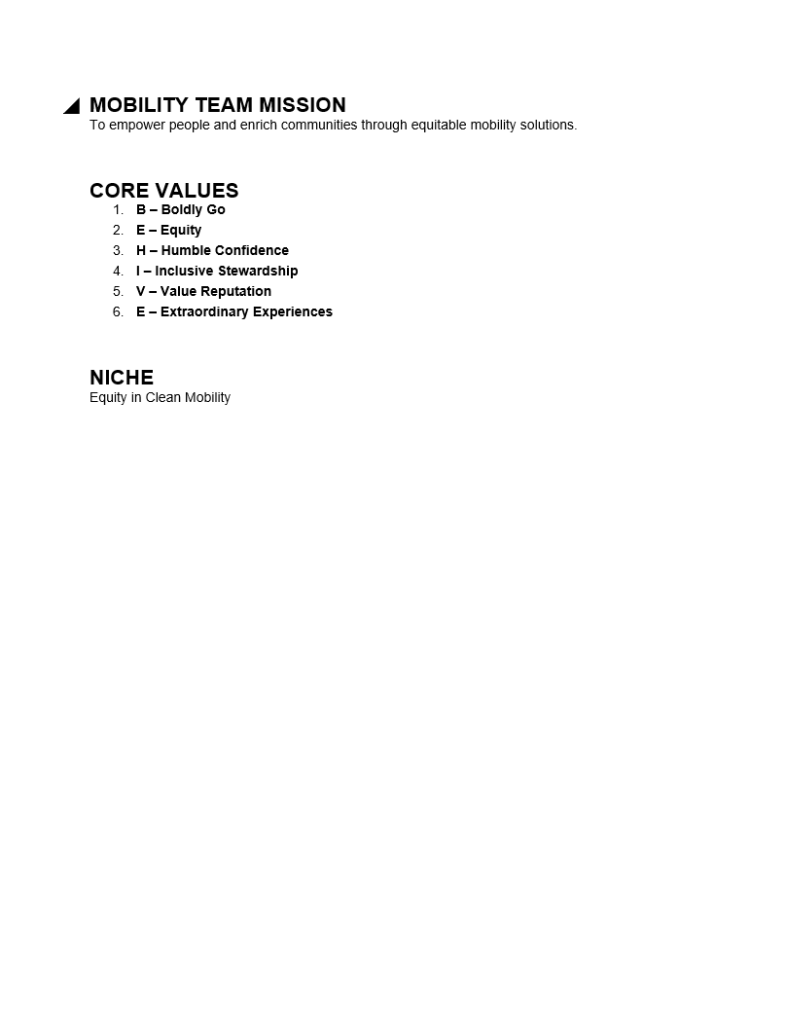

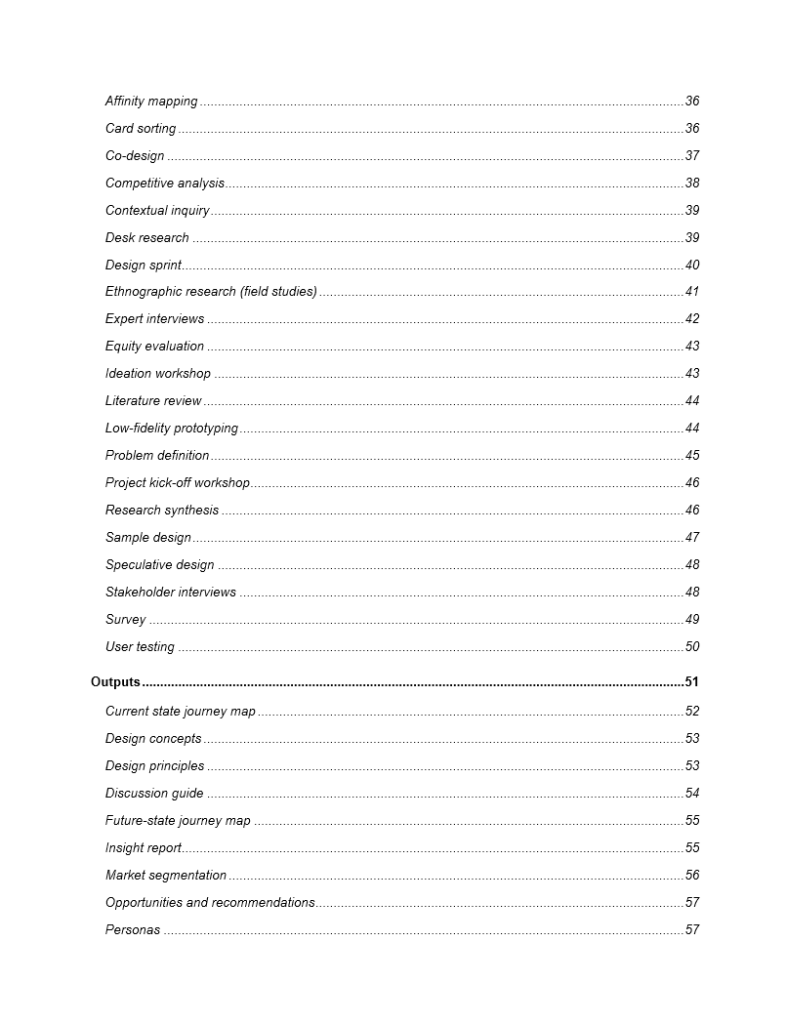
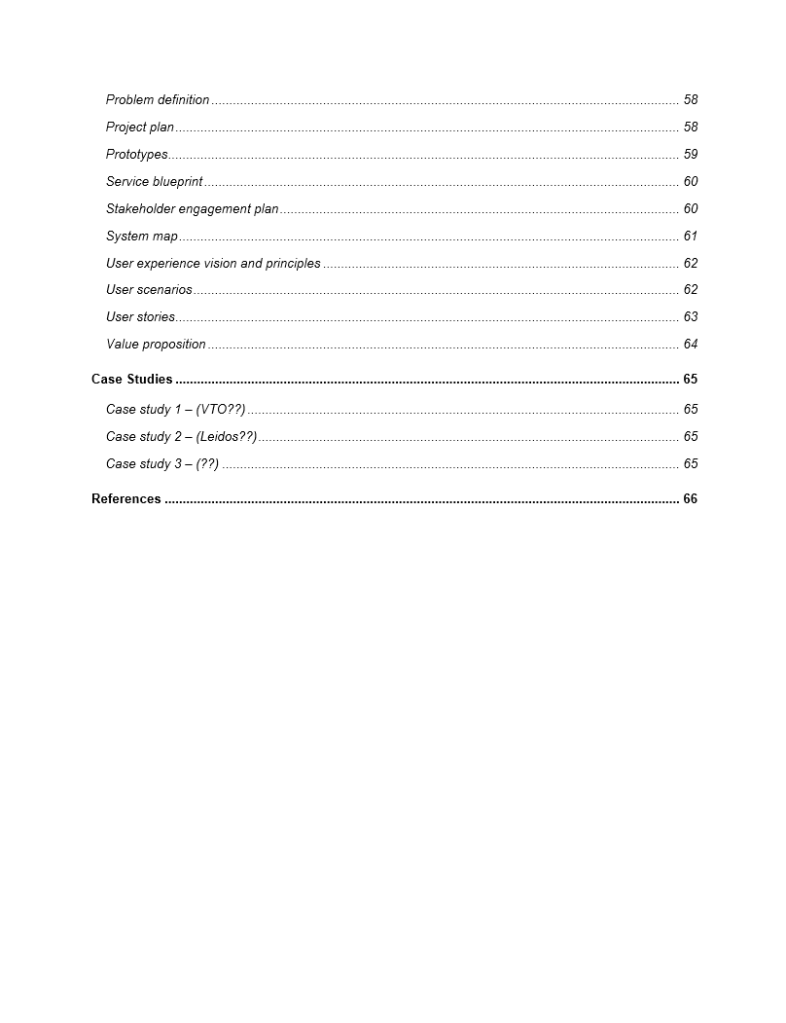
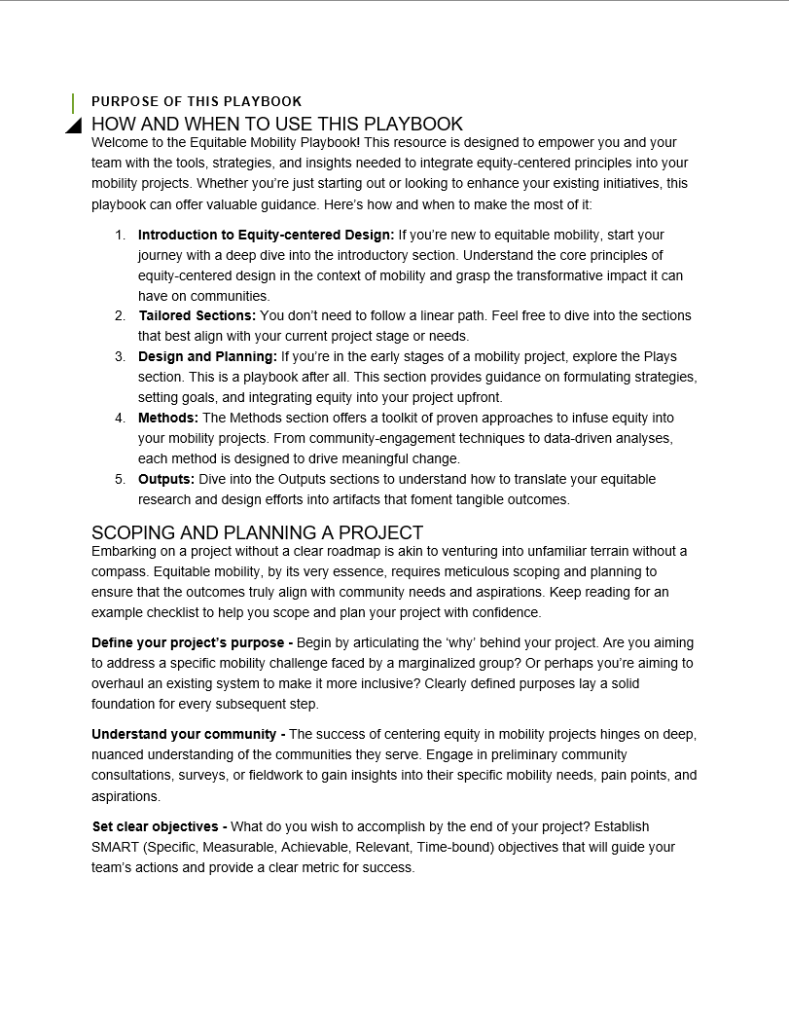
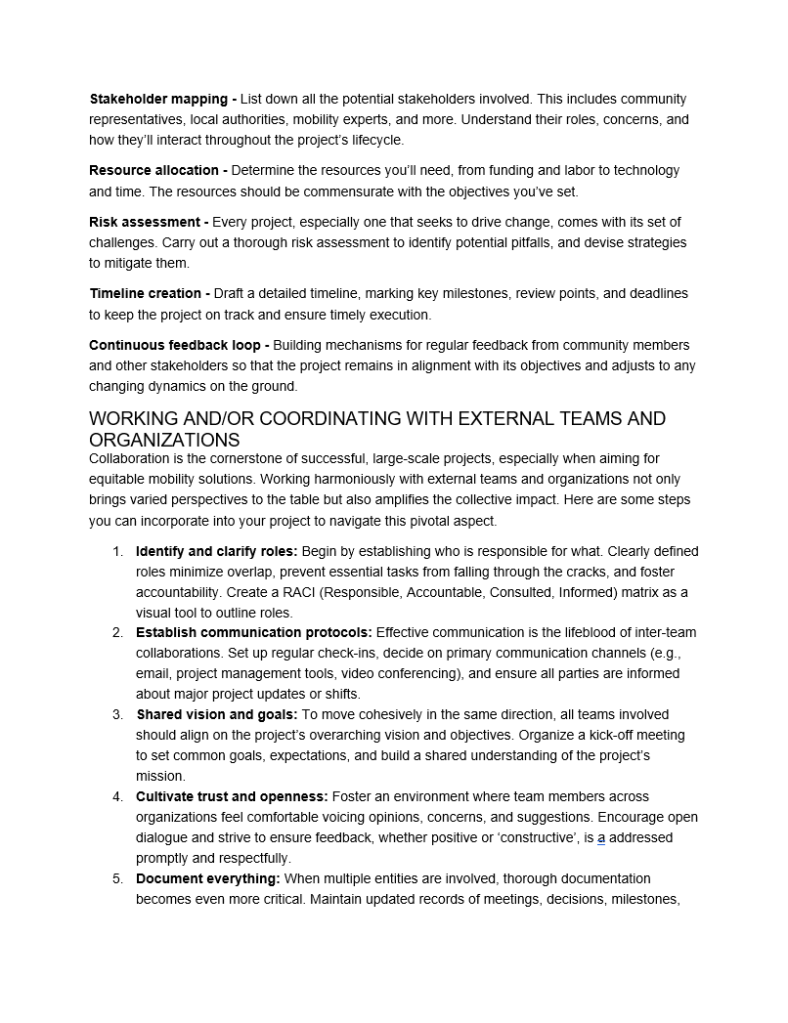
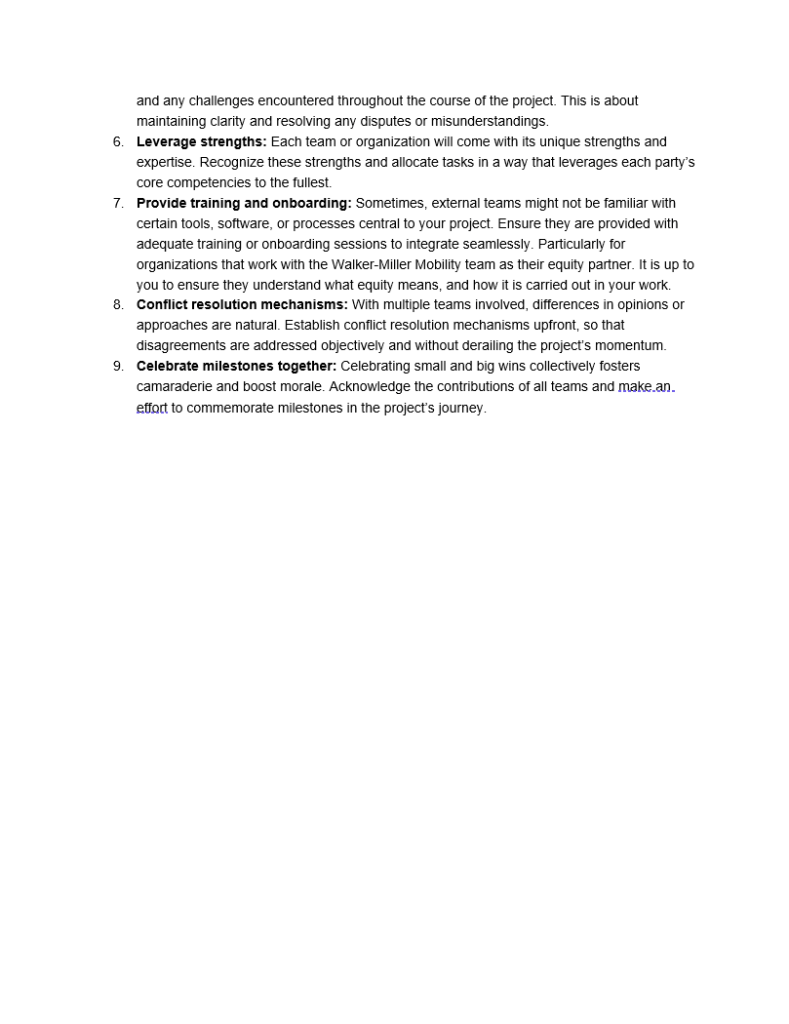

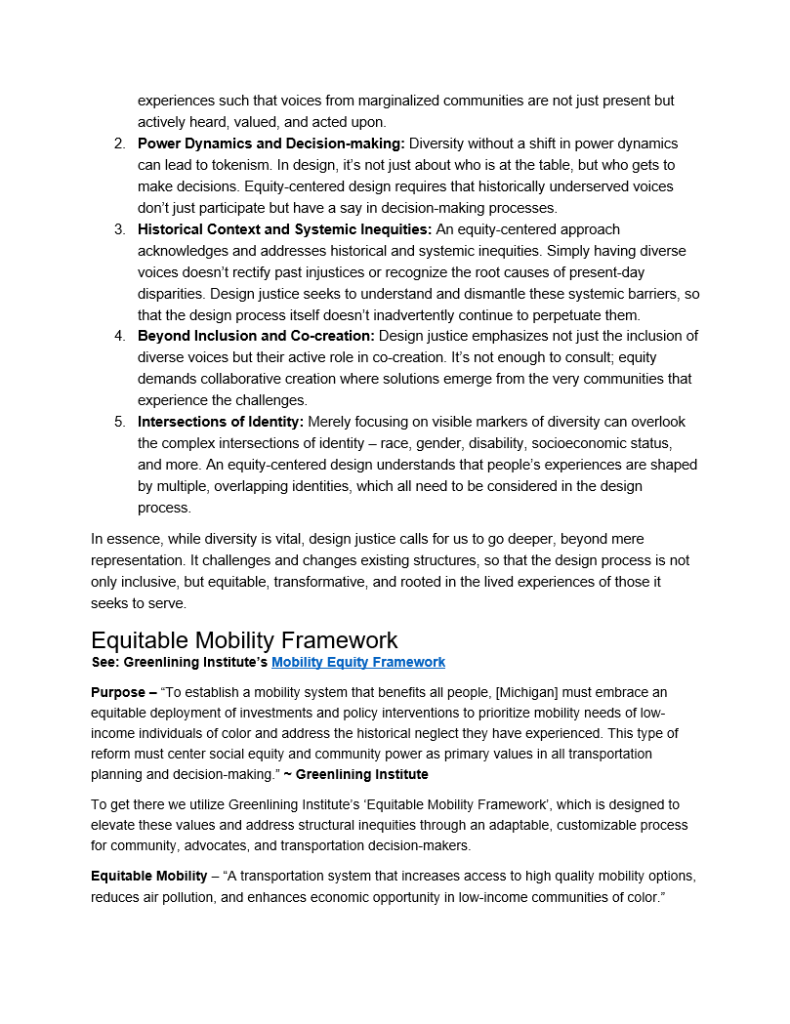
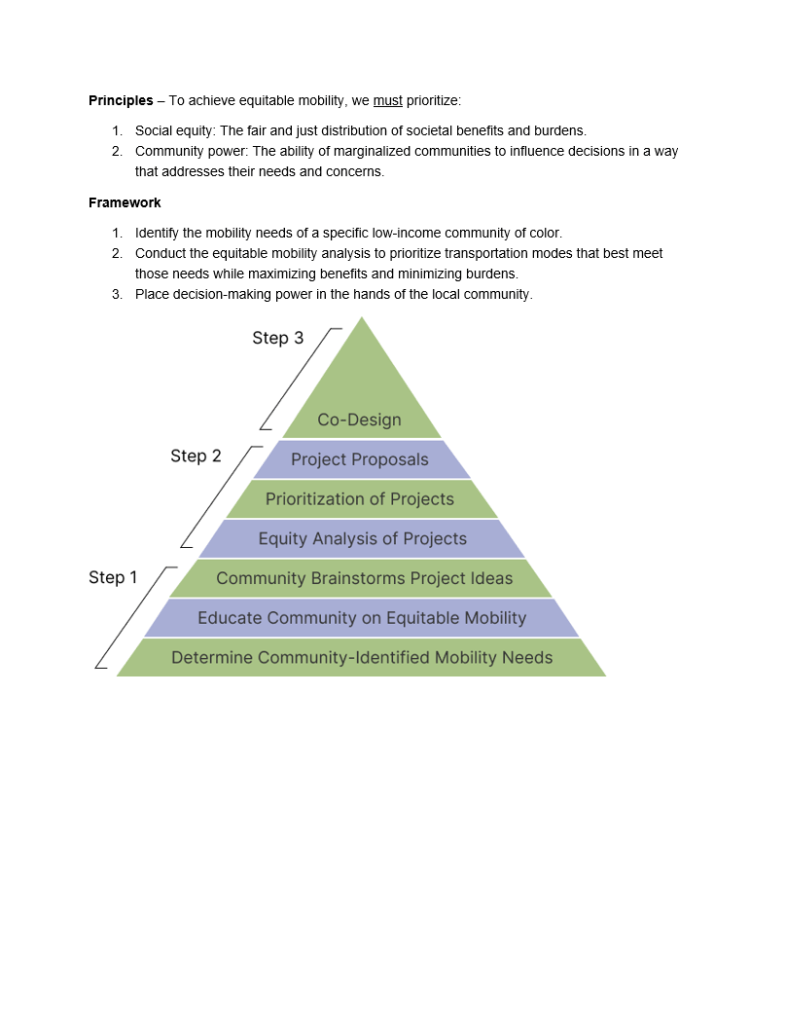
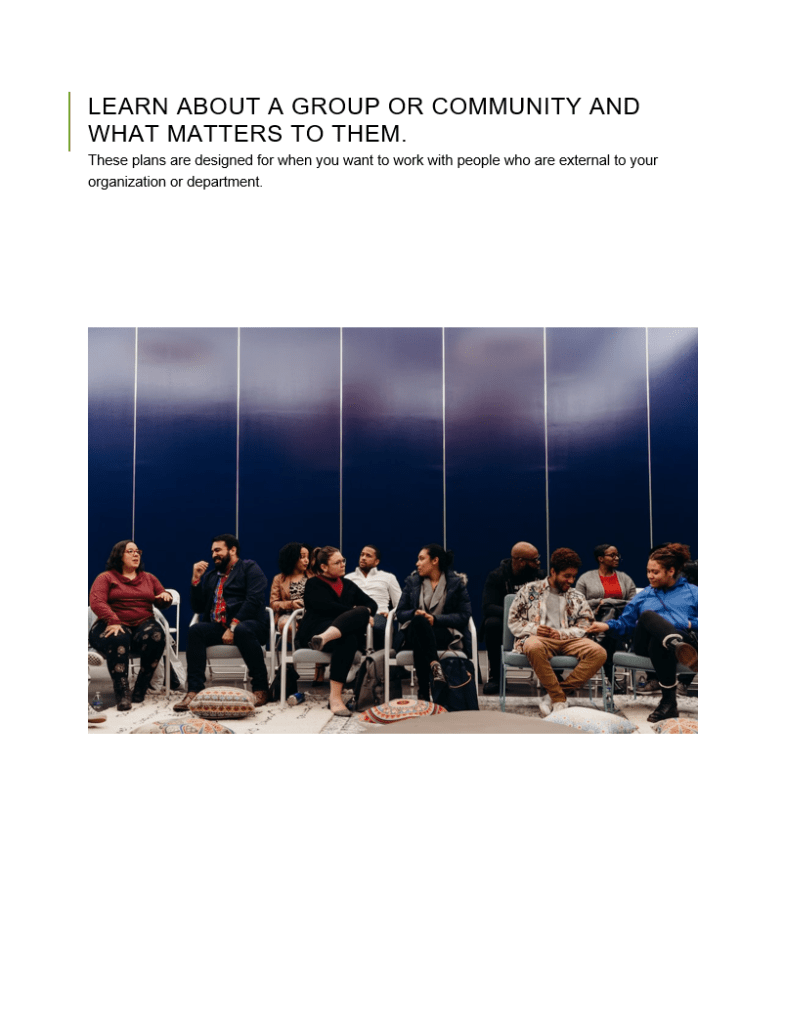
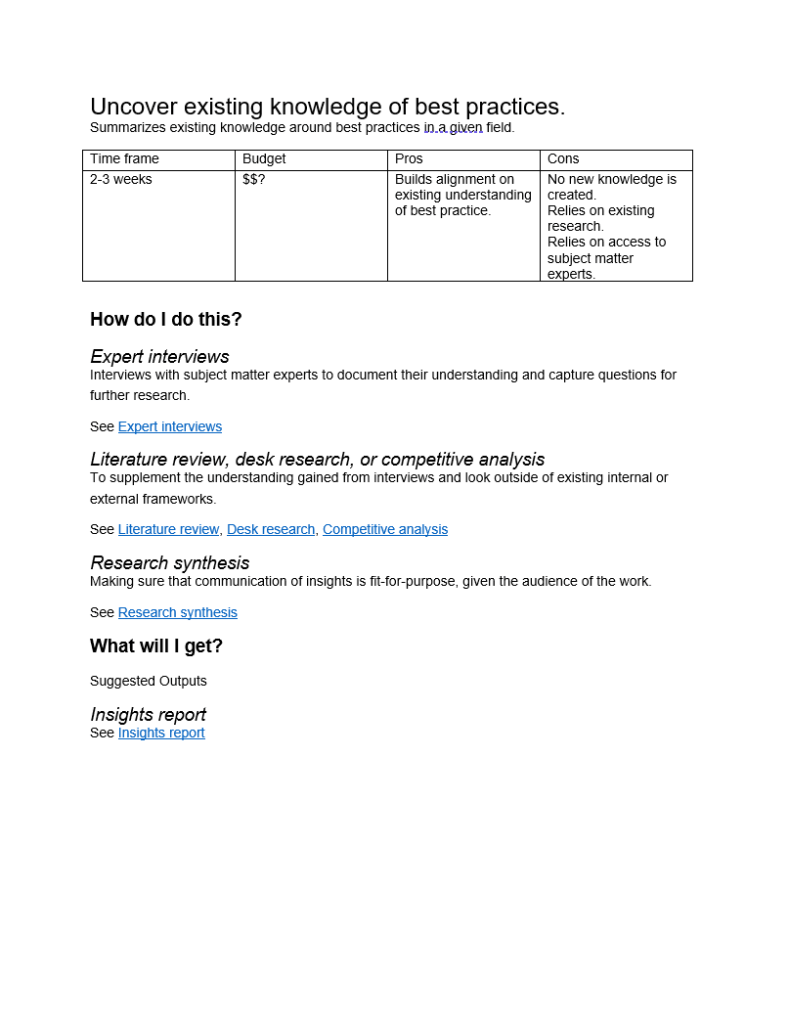
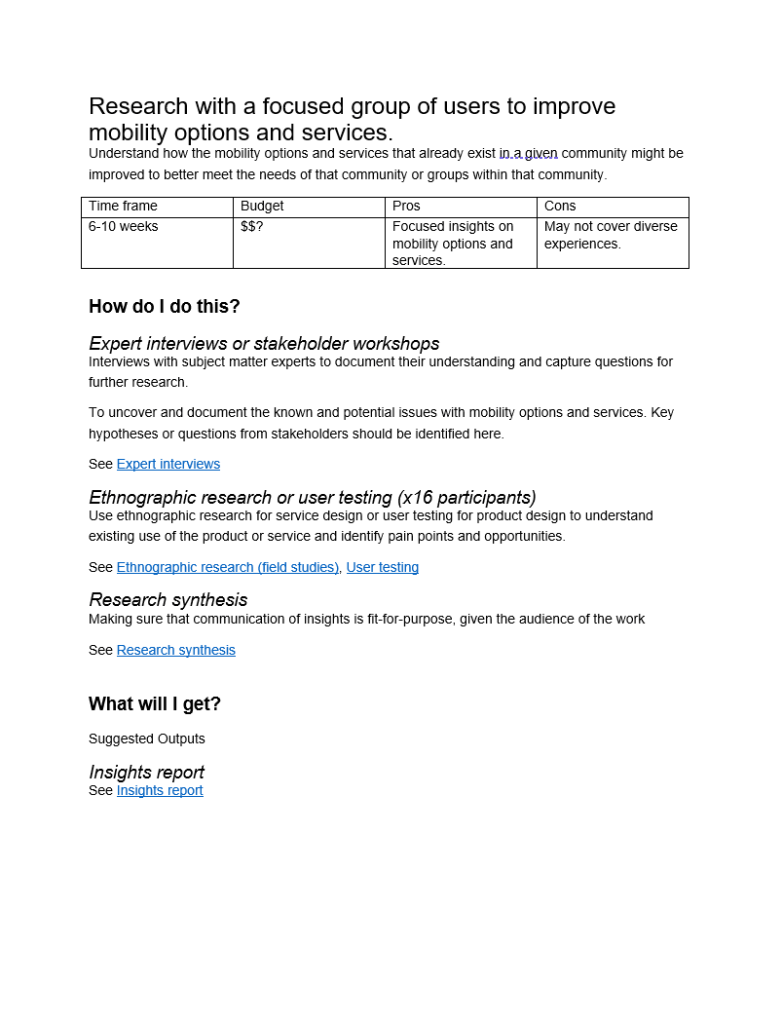
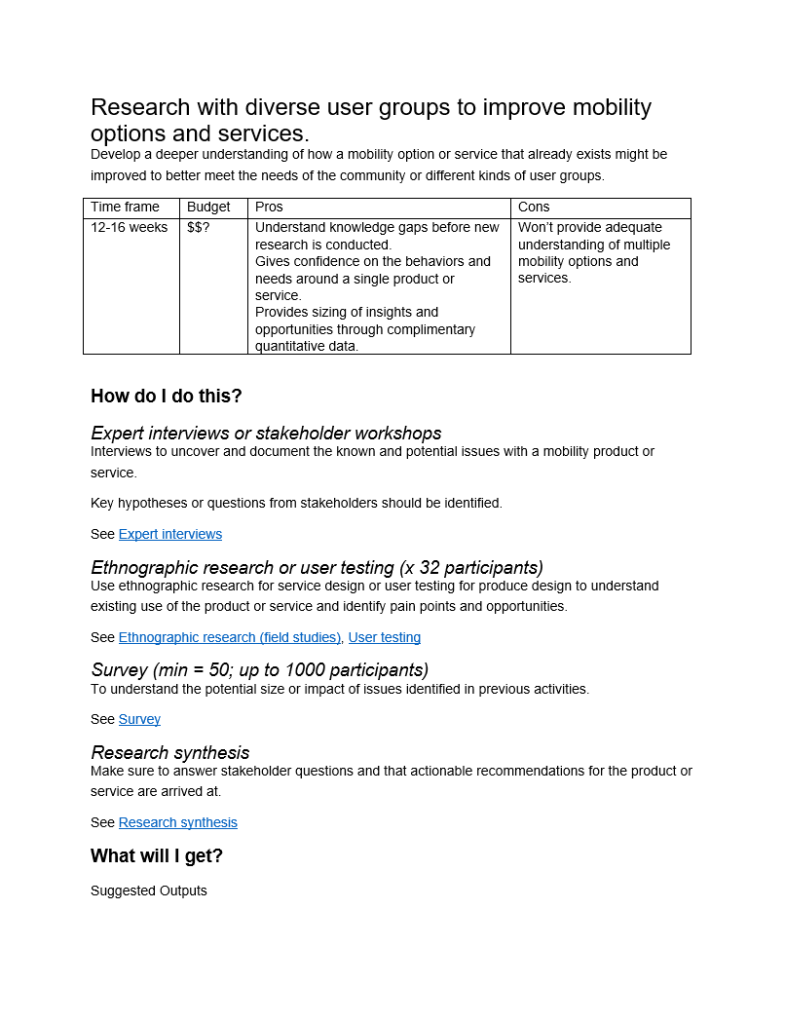
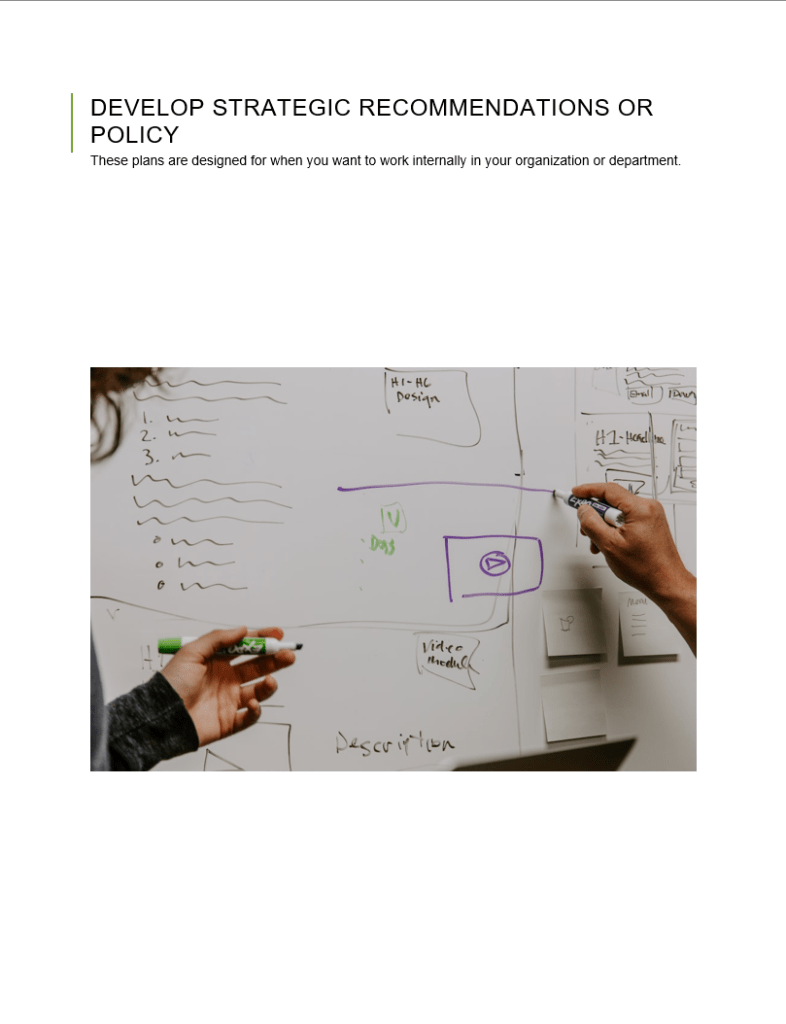
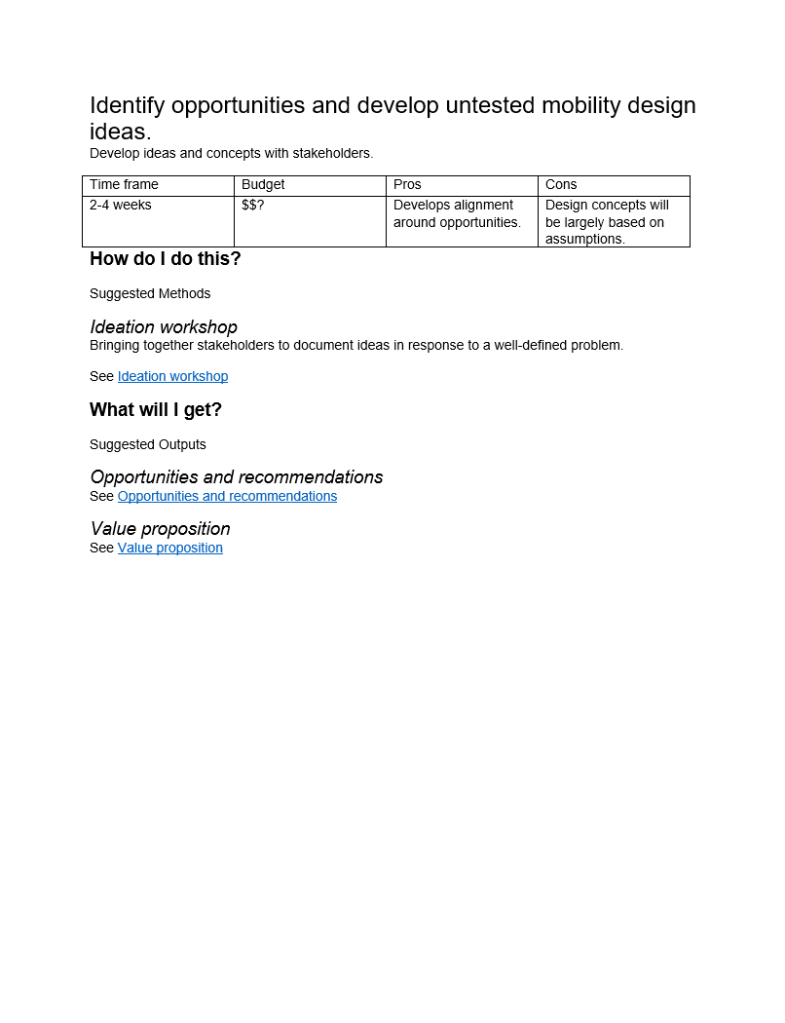
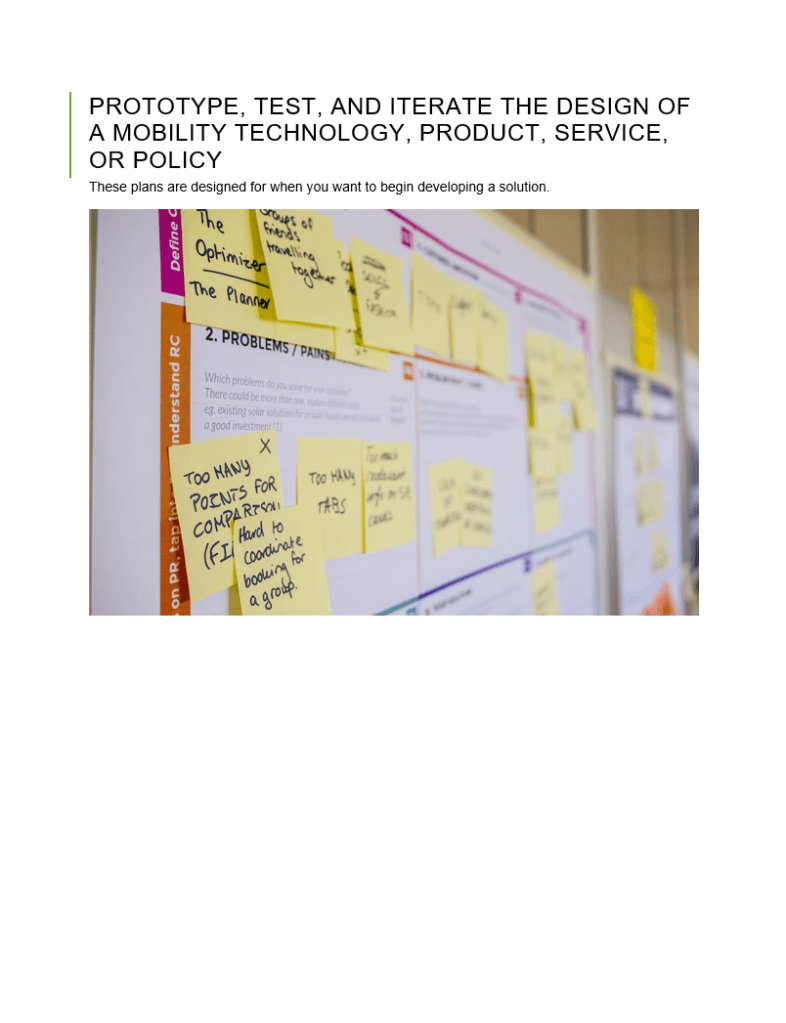
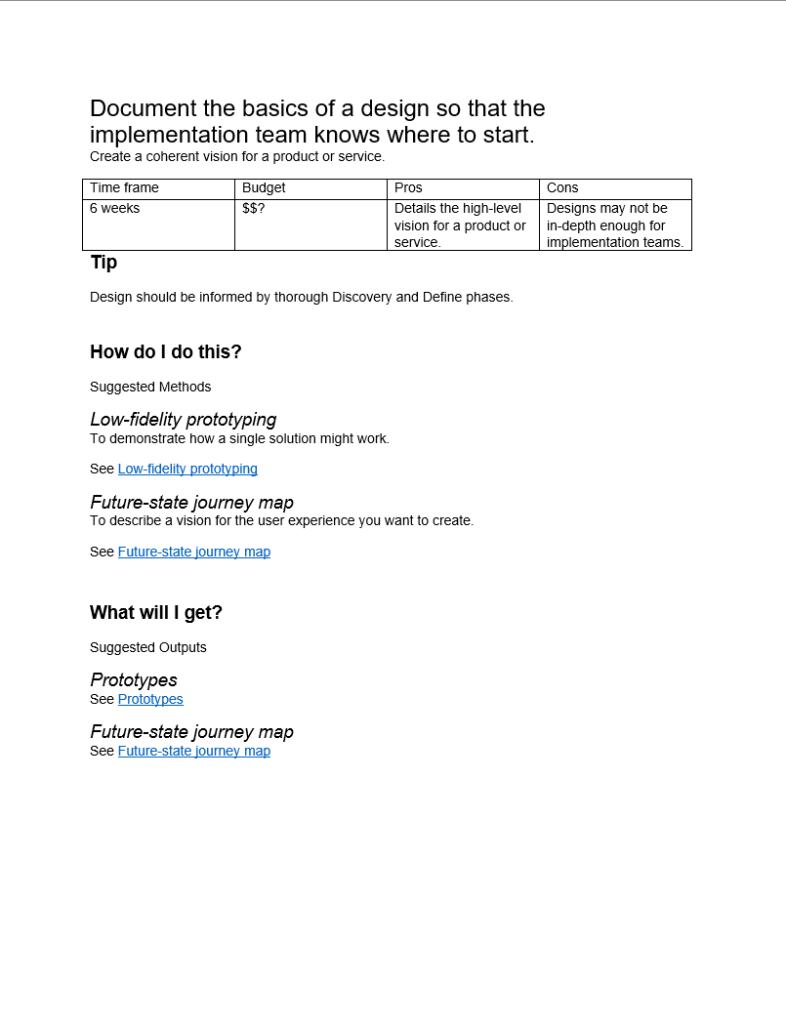
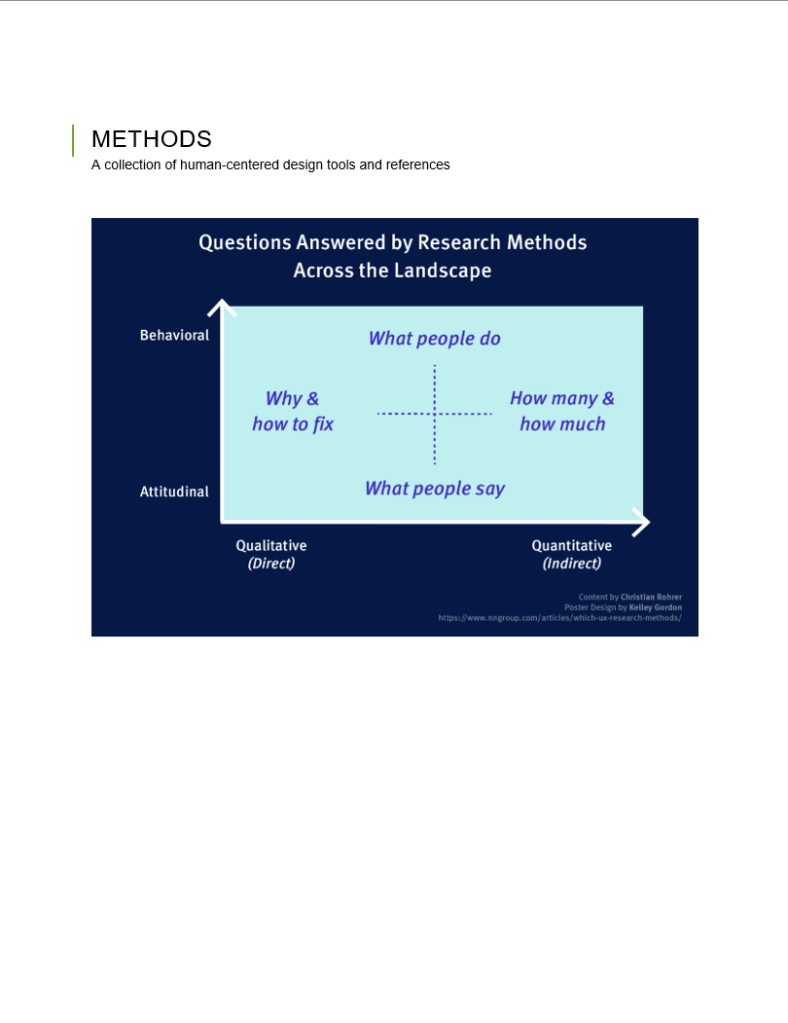
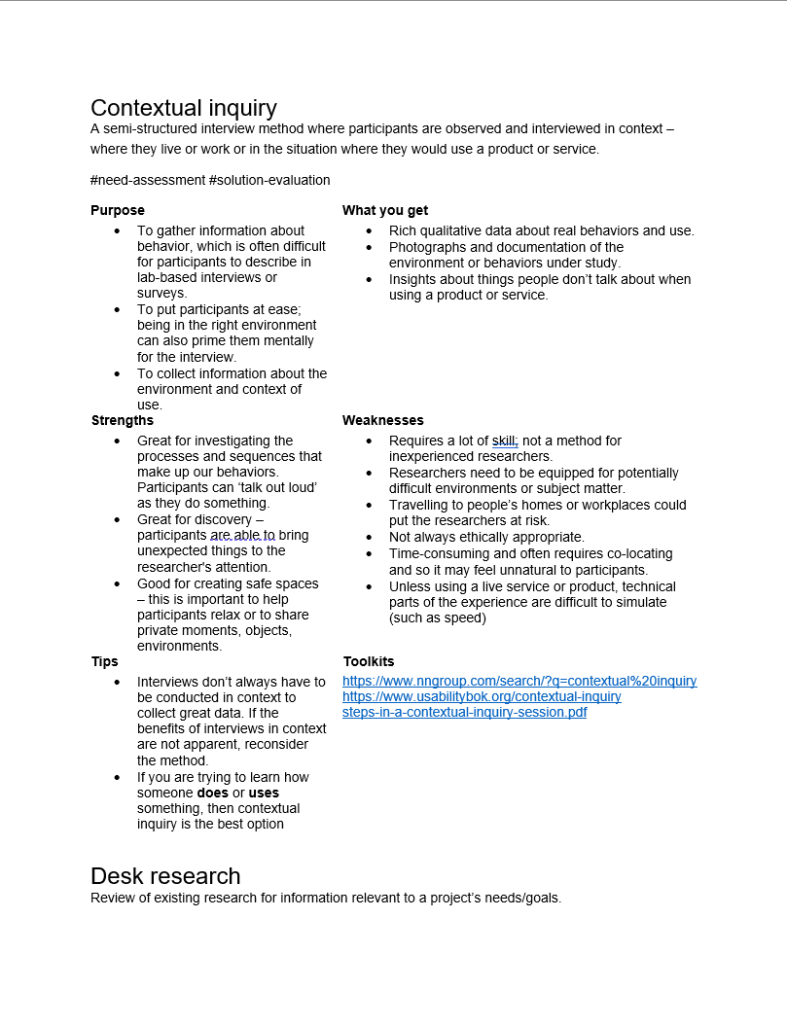
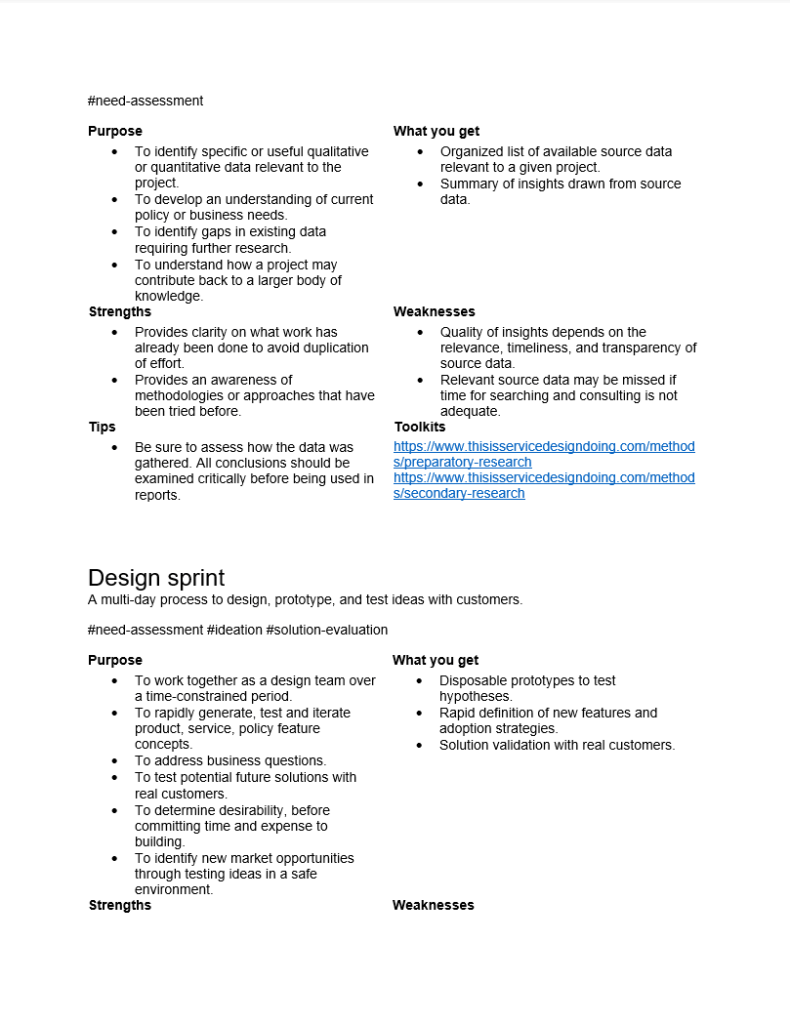
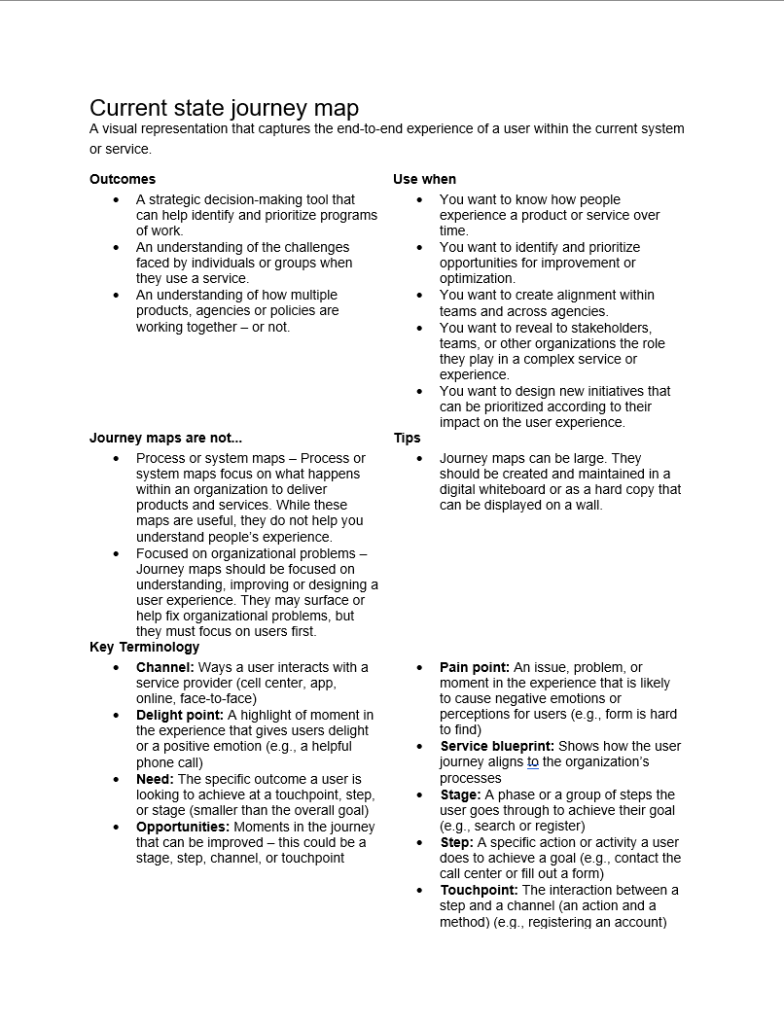
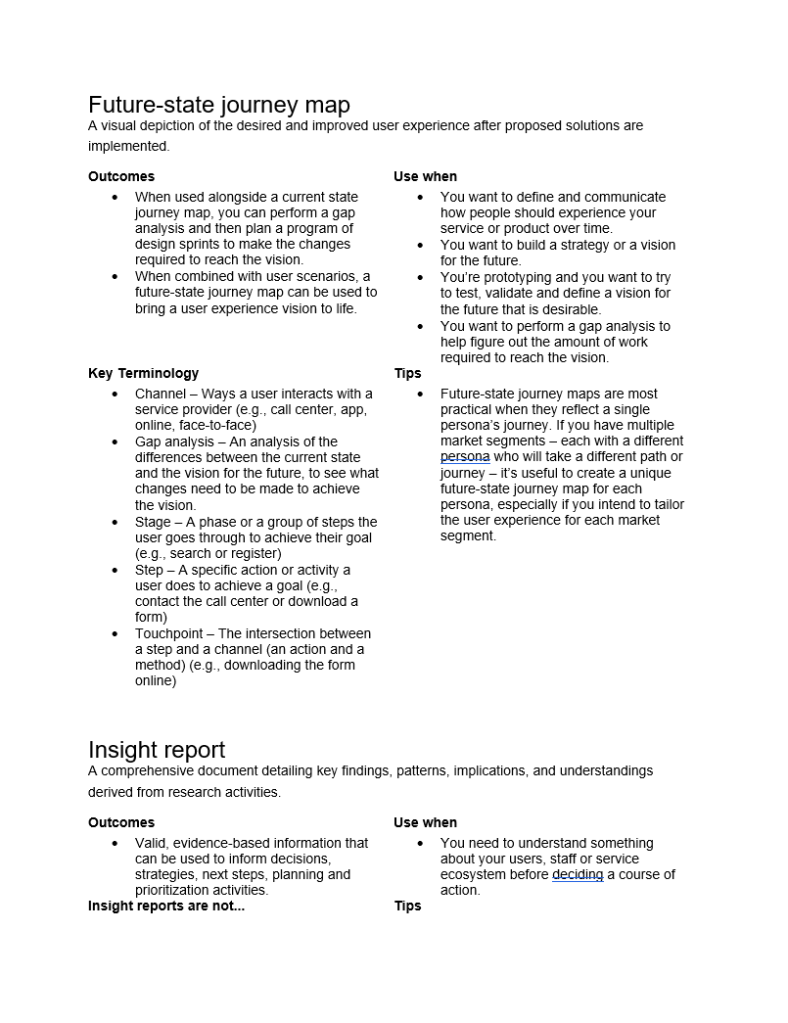
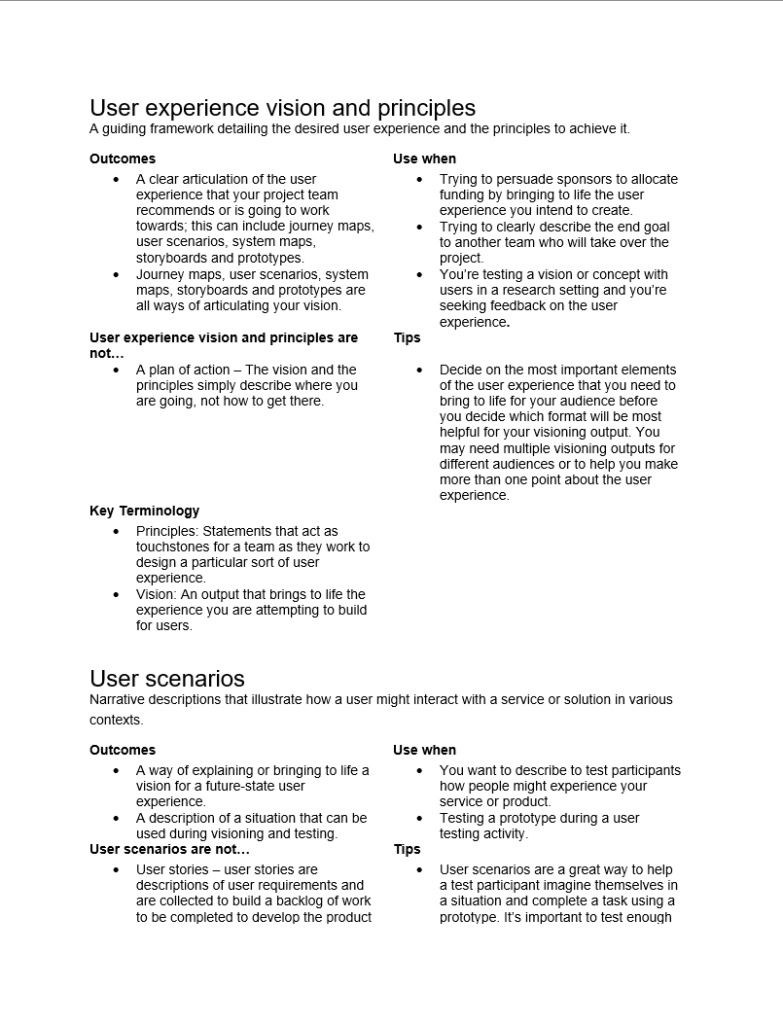
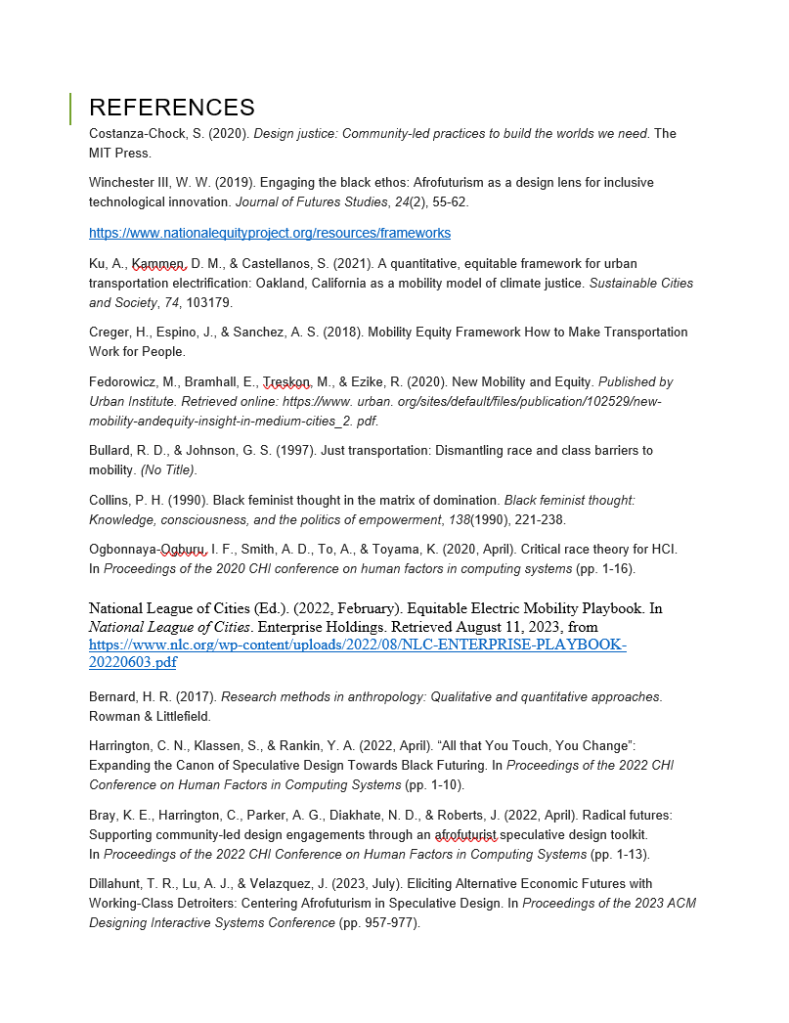
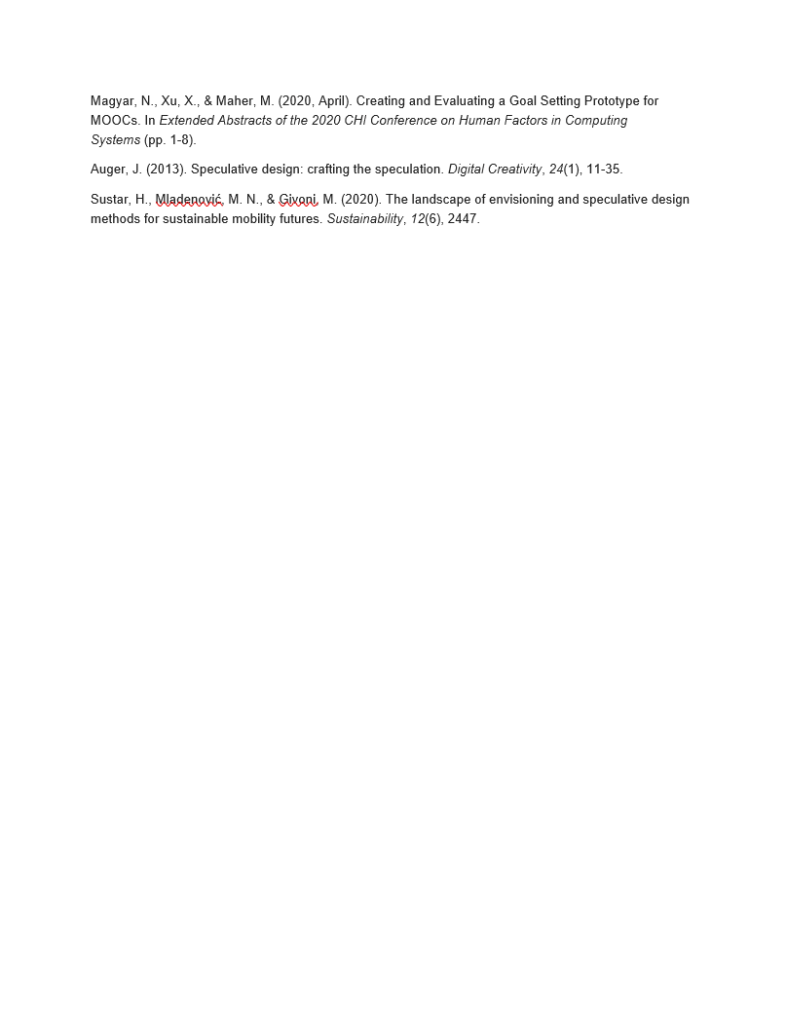
I authored the Equitable Mobility Playbook to serve as foundational, company-wide guidance. This is a particularly useful tool for scaling an equity-centered approach to mobility projects across the organization. The playbook itself was designed for:
- The Mobility Team: To define a shared approach and become the single source of truth for how we practice equity-centered design.
- Business Development: To identify and secure new opportunities (RFPs) that aligned with our core mission.
- Senior Leadership: To better articulate our work on public-facing panels and at conferences.
- Cross-Functional Teams: To help others teams and functions across the organization understand the types of problems to bring to the Mobility team and how to apply an equity-centered lens to their own work.
This playbook laid the foundation for an internal research capability and provided a common language for discussing and executing on a complex topic.
2. The Bidirectional Charging Pilot: A High-Impact Project
In 2025, my role was moved from the Mobility team to Innovation Research & Consulting. I have secured and am wrapping up a two-component pilot study on bidirectional charging. The goal of this project is to assess the long-term environmental and social impacts of bidirectional EV charging, informing a future utility strategy across a fifteen-year time horizon. I’m responsible for the full lifecycle of this research:
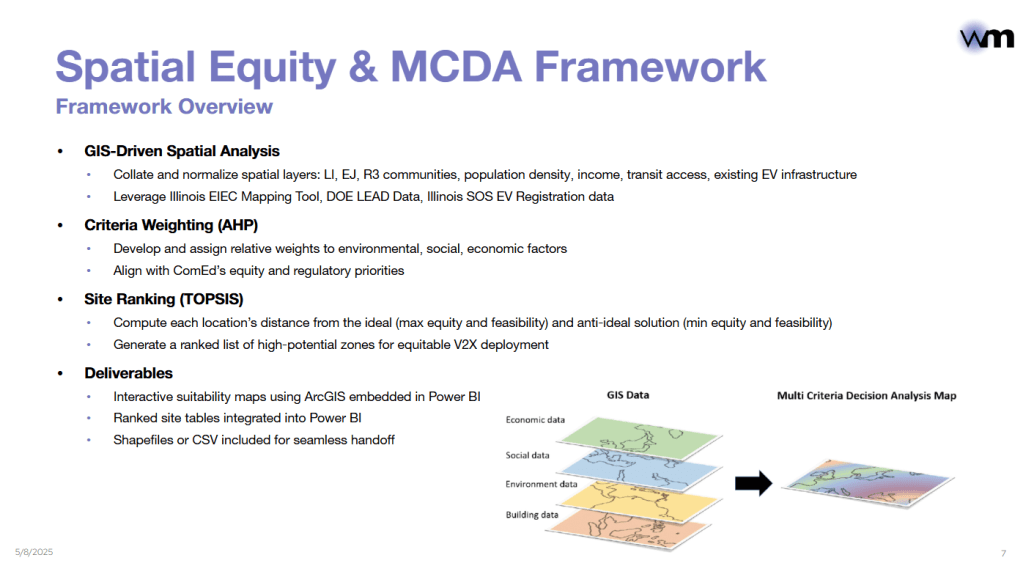
- Study Design: I designed a comprehensive research plan from the ground up, utilizing sophisticated methodologies including a Prospective Life Cycle Analysis (pLCA) and Multi-Criteria Decision Analysis (MCDA) using Technique for Order Preference by Similarity to Ideal Solution (TOPSIS).
- Research Leadership: I am leading all research activities, including data collection, wrangling, modeling and analysis, managing internal and client expectations through my direct supervisor.
- Data Synthesis: I am analyzing all data to translate findings into actionable, evidence-based insights that will shape future business decisions.
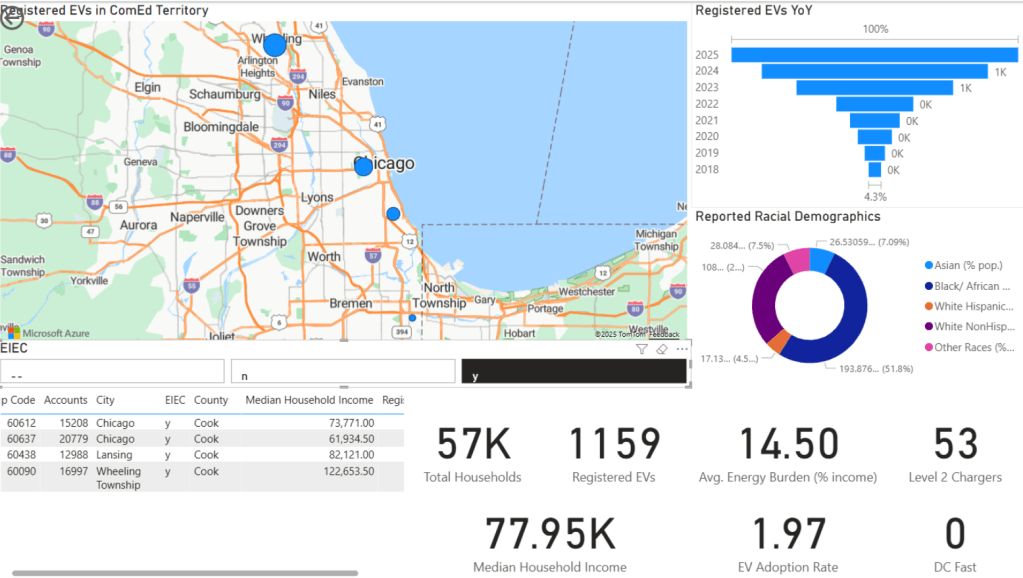
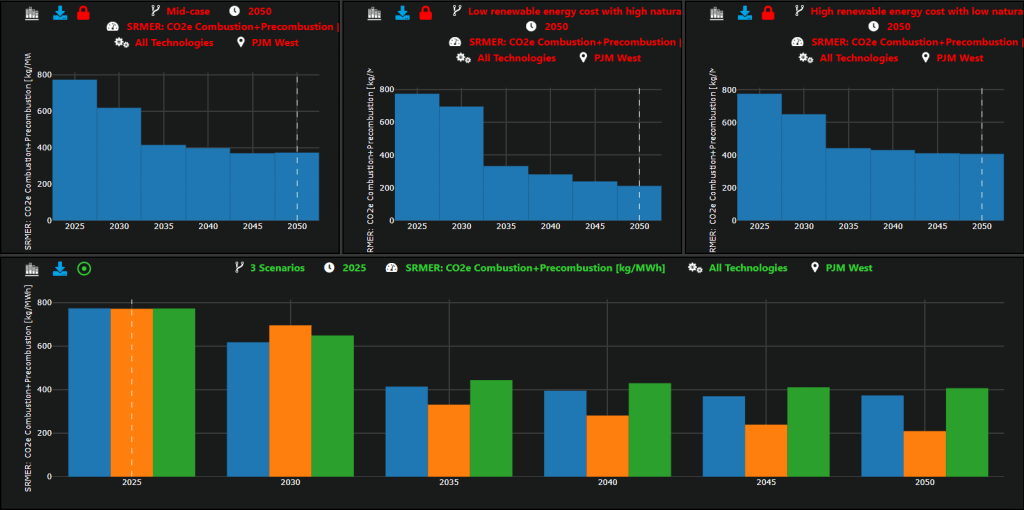
- Data Visualization: I’m going above and beyond to transform a Power BI report into an interactive scenario engine which will continue to provide value for years to come (rather than a static report and slide deck of findings and recommendations).
3. Process & Execution: The ComEd BE Program
A key part of my role was to function as the UX Subject Matter Expert on the ComEd Beneficial Electrification (BE) program, the largest program in ComEd’s portfolio and the largest contract in Walker-Miller’s history. This work primarily focused on aligning the Sightline EV charger rebate portal with UX best practices and WCAG. Thus my approach was two-pronged: I provided a UX audit (heuristic + accessibility evaluation) to identify system-level issues, followed by a targeted usability study to validate and deepen our understanding of user-specific pain points.
Key Findings
The research uncovered significant usability and experience issues that were a major source of frustration. The most critical pain points uncovered included:
Poor Information Architecture

The platform lacked a consistent flow and had ambiguous labeling, which increased cognitive load for users.
Cumbersome Document Uploads
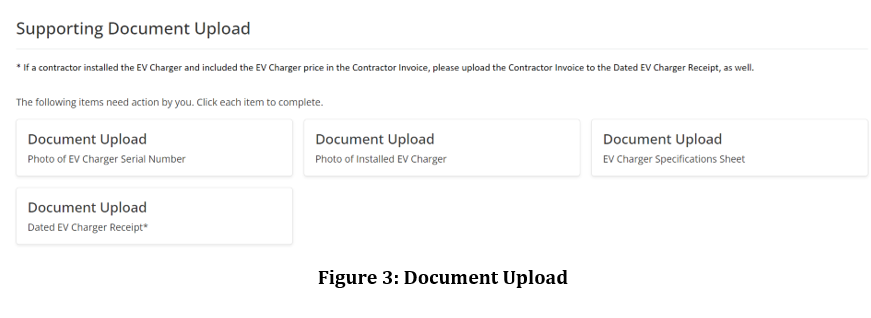
Users were confused by unclear file format requirements and the inability to upload multiple documents at once.
Inefficient Form Design
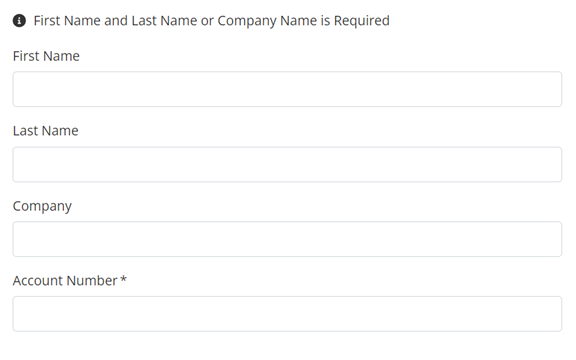
Application forms were not optimized for efficiency, leading to cognitive overload and a lack of system status visibility.
Recommendations
Based on these findings, I provided our subcontractor, who designed the platform) with actionable recommendations to improve the platform’s overall usability.
Simplify Navigation
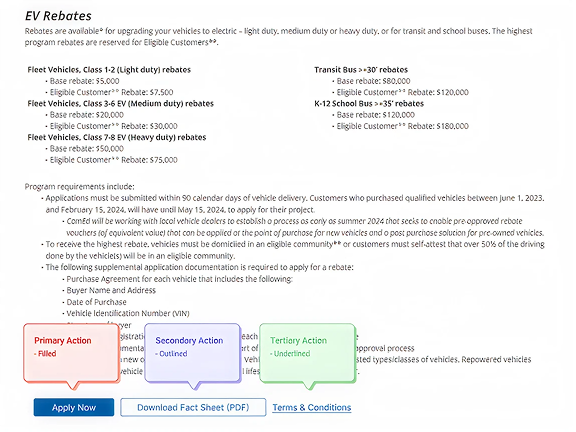
I recommended creating clear site navigation with a visible back button and a progressive disclosure model.
Improve Document Uploads
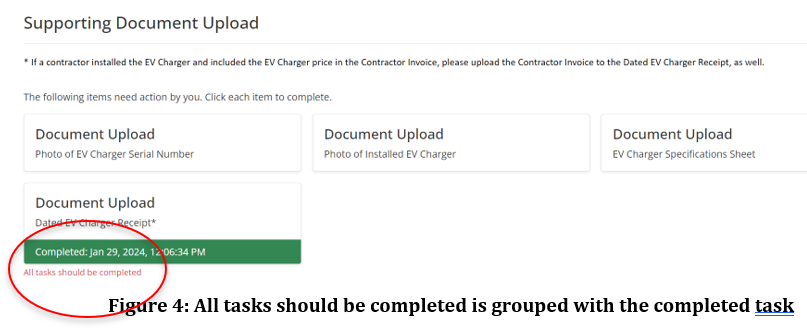
I advised standardizing file upload requirements and enabling user to upload multiple files at once.
Optimize Forms
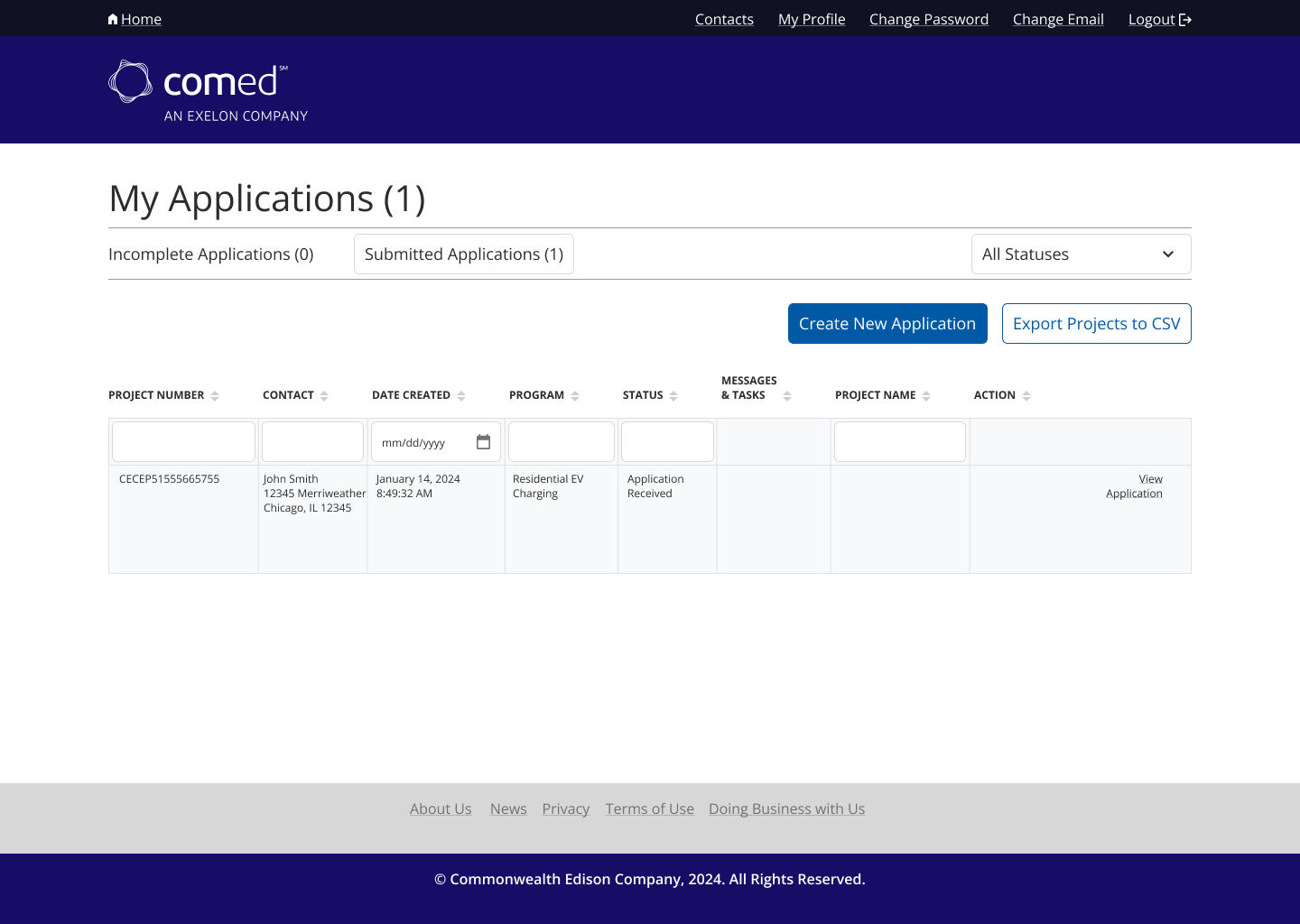
Recommendations included implementing a progress bar, adding a “save feature,” and reorganizing form fields for better information flow.
Impact & Outcomes
My work had a direct and demonstrable impact on Walker-Miller’s business strategy and operational capacity. My research on the ComEd BE program directly informed internal program management decisions and strategic planning that enhanced the team’s understanding of user pain points and solved a bottleneck that allowed more people to submit rebate applications.
The Equitable Mobility Playbook empowered our Business Development team to pursue more mission-aligned opportunities, while the insights from the bidirectional charging study will provide strategic foresight to inform long-term utility planning.
By creating this foundational research and leading on these projects, I not only executed on my role, but I helped establish the company’s reputation as a thought leader in equitable clean energy solutions. My work has been instrumental in strengthening our strategic vision and will serve as a roadmap for future initiatives.
 Matt Garvin, MSI
Leave a comment