Crafting Futures with Artisanal Cyborgs

On a dark slate-gray background, the words “ARTISANAL FUTURES” appear in large uppercase teal letters, with “CO-DESIGN WORKSHOP” in smaller white uppercase text beneath. Below the title is a decorative, abstract network graphic of interconnected nodes and lines in red, light blue, and white, evoking a stylized circuitry or data map.

Overview

At the Generative Justice Lab, I contributed to interdisciplinary research and participatory design projects aimed at fostering equitable innovation and sustainability. My work centered on amplifying community-driven futures by identifying uses for automation, AI, and digital fabrication technologies among artisan entrepreneurs engaged in traditional handicraft.
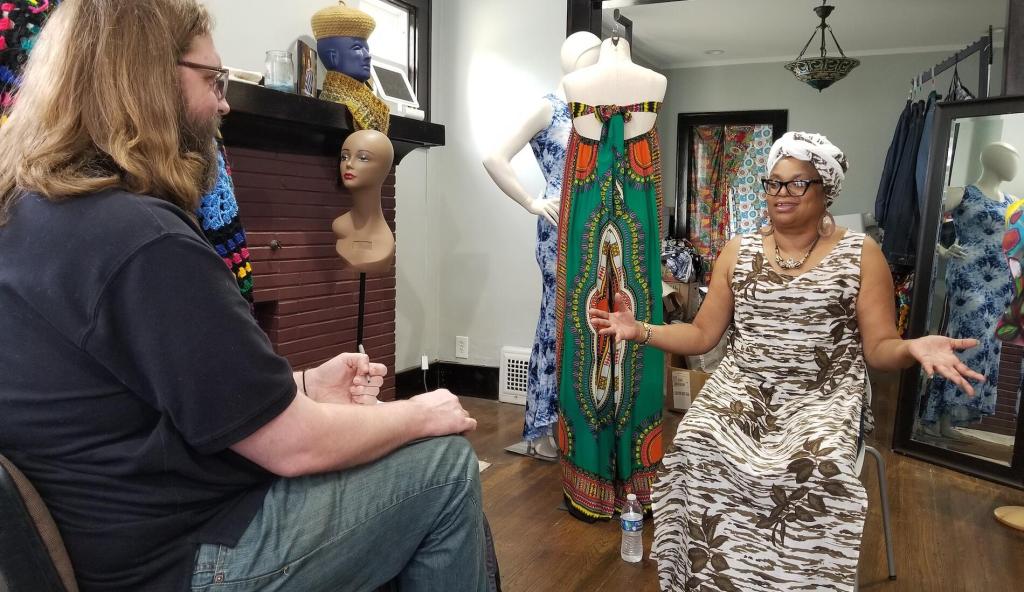
A researcher with long hair and glasses interviews a Black woman artisan in a colorful textile studio. The woman, wearing a patterned dress and headwrap, gestures expressively while mannequins dressed in vibrant African fabrics and a mannequin head on a stick surround them. The setting is warm and creative, highlighting handmade fashion and cultural craftsmanship.

ARTICLE: Eglash Awarded NSF grant to study how technology can empower artisan communities

This research project reimagines automation not as a tool of replacement, but as a means of empowerment for artisans in underrepresented communities. Blending AI with ancestral craft and local entrepreneurship, the team is building a future where tradition, equity, and innovation co-create artisanal economies of scale.

Focus Areas

  • Human-autonomy teaming design
  • Strategic foresight and futures research
  • Participatory design ethnography
  • Assets-based and sustainable design methods for circular economies.
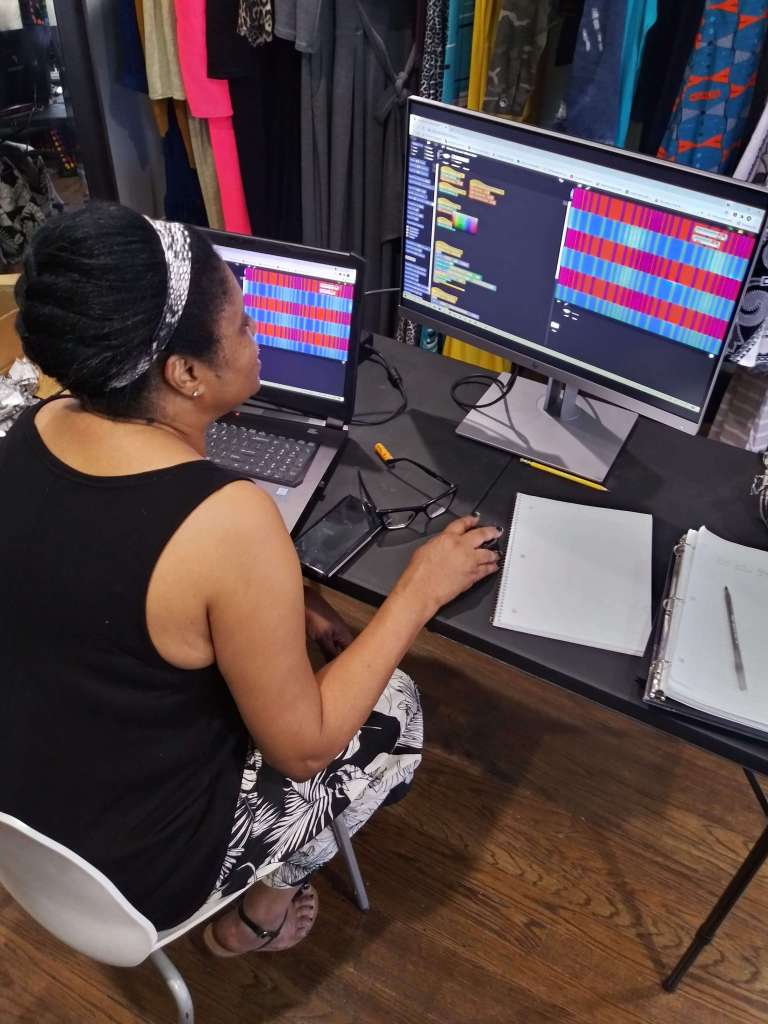
Detroit-based artisan designer, ‘Visual Noise’ and I co-design Kente Cloth patterns using a culturally situated design tool (see more at csdt.org

Design & Research Approach

I adapted design ethnography for the Generative Justice Lab by adopting an assets-based, participatory design approach rooted in the theoretical framework of Generative Justice. To do this I led mixed-method field research among artisan entrepreneurs in Detroit to explore how artisanal identities and counter-industrial values could inform leading-edge innovations in the frontiers of AI and the Future of Work. My work involved designing and administering the pre/post “leading-edge” status survey, recruiting participants, scheduling site visits for contextual inquiry sessions, planning and facilitating co-design workshops, developing speculative design provocations, as well as conducting overarching ethnographic interviews with the artisans.

Heritage algorithms and African fractals abound inside another artisan’s studio.
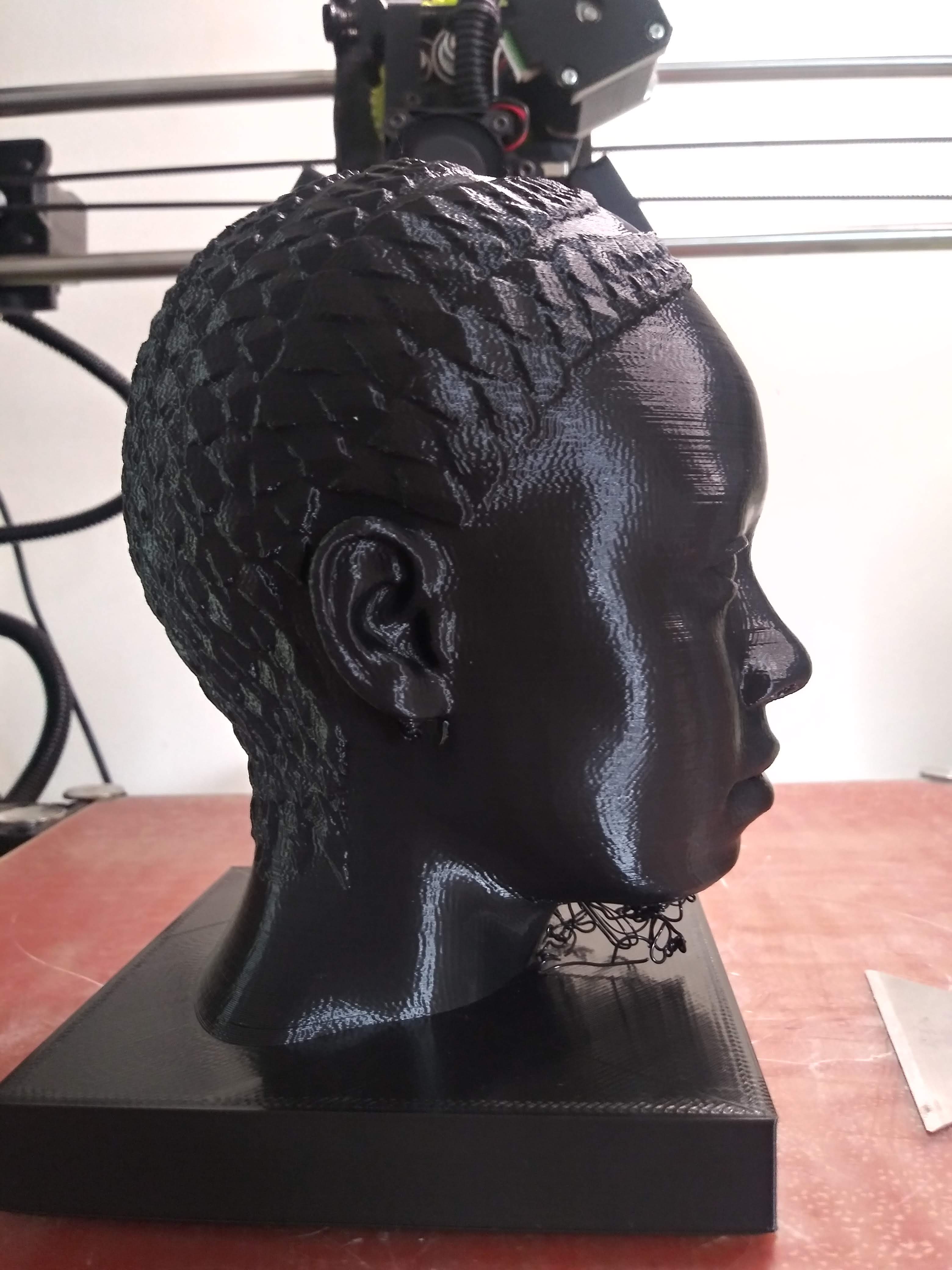
We used Deep Dream to experiment with AI style transfer techniques (pre-Midjourney & ChatGPT) to imagine this image of Chadwick Boseman. Then we transferred the image to a t-shirt using a sublimation dye printer.

Key Contributions

  • I led the development of a framework for “artisanal futuring” to guide grassroots automation design.
  • Synthesized themes around autonomy, sustainability, and identity into design principles for equitable AI.
  • Supported publication of insights in academic and policy-oriented formats.
Artisan ‘Akoma Detroit’ makes her felt by hand. Then she turns it into art. I demonstrated how image editing technology (Adobe Capture) could reduce image complexity to extend her capabilities to ply her craft using this image of Betty Davis.

Artisanal Futures Workshop

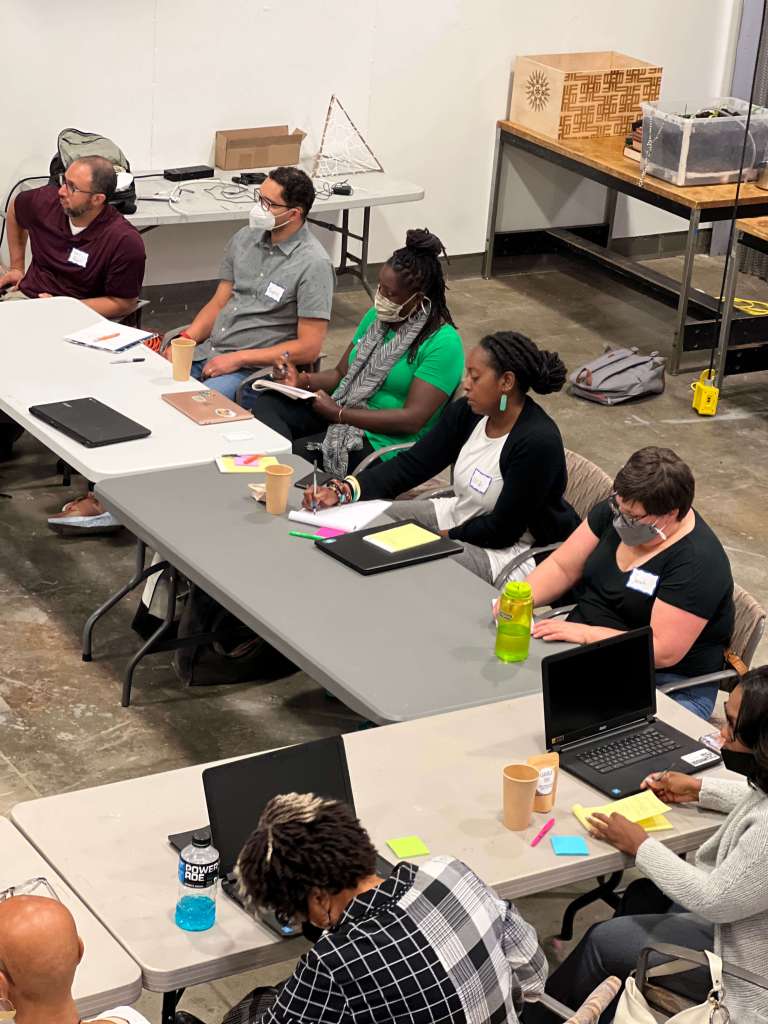
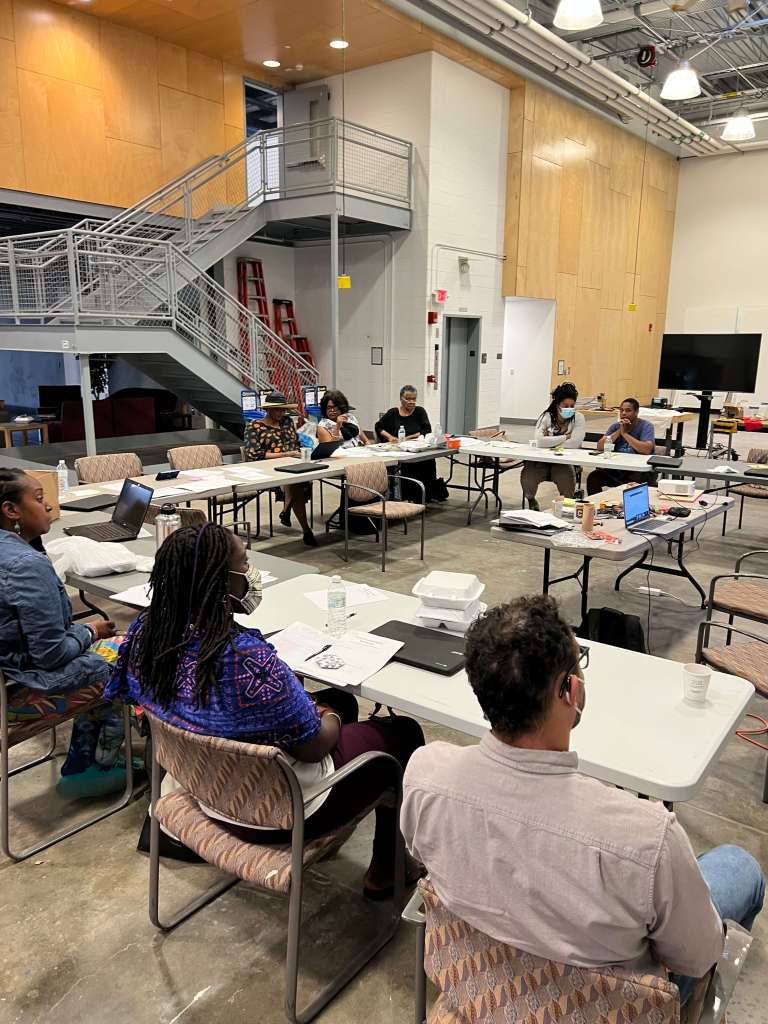
  • A diverse group of people seated around two rectangular tables arranged in a U-shape, engaged in a collaborative meeting or workshop. Most participants have laptops, notebooks, or sticky notes in front of them. Several individuals are wearing face masks, and coffee cups and water bottles are visible on the tables. The room has a concrete floor and industrial-style furnishings.
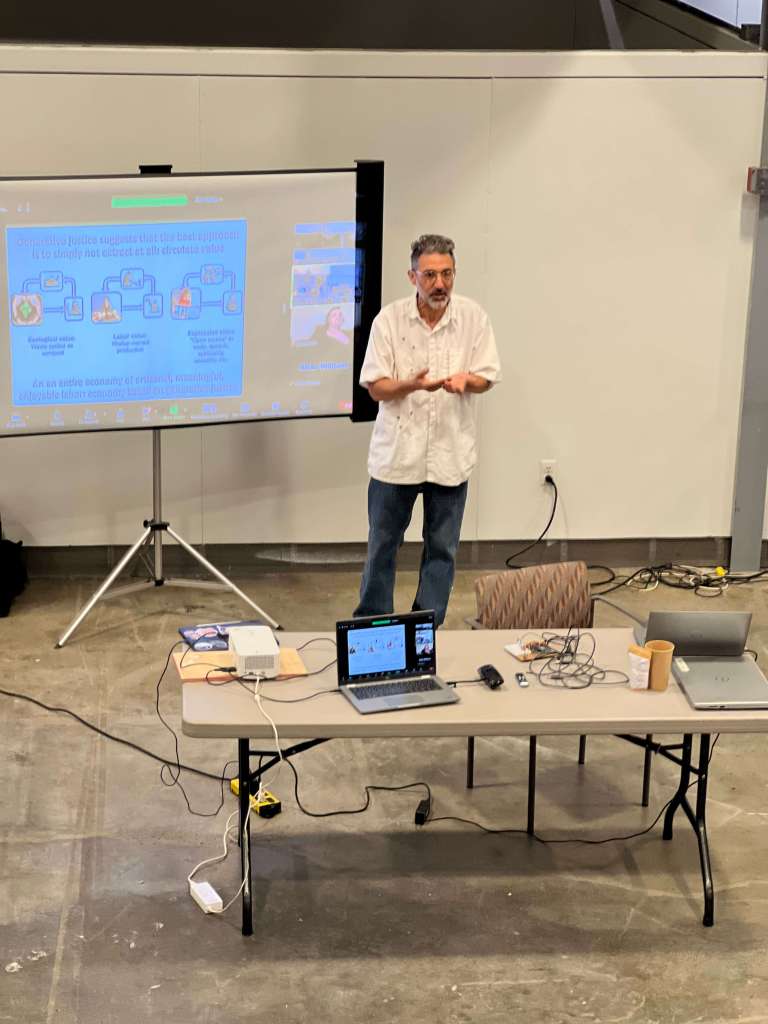
  • A man stands in front of a projection screen giving a presentation in an open room with concrete floors. He is wearing a white shirt and jeans, gesturing with his hands. In front of him is a table with laptops, cables, a coffee cup, and presentation equipment. The projected slide appears to feature diagrams and text with a blue background.
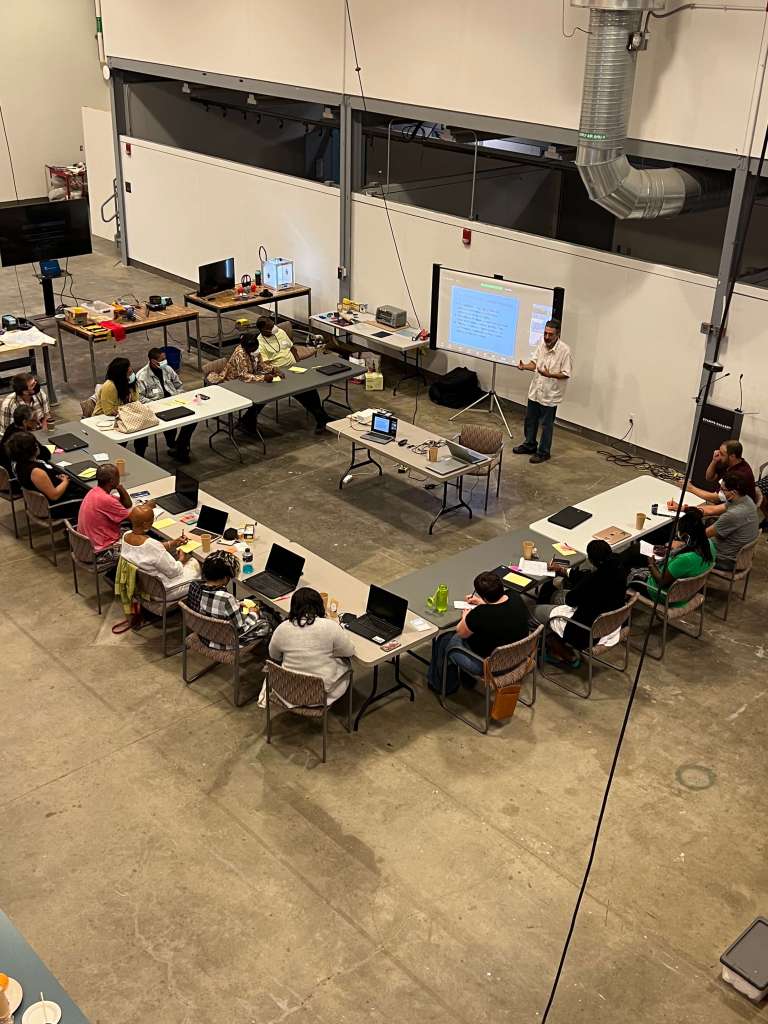
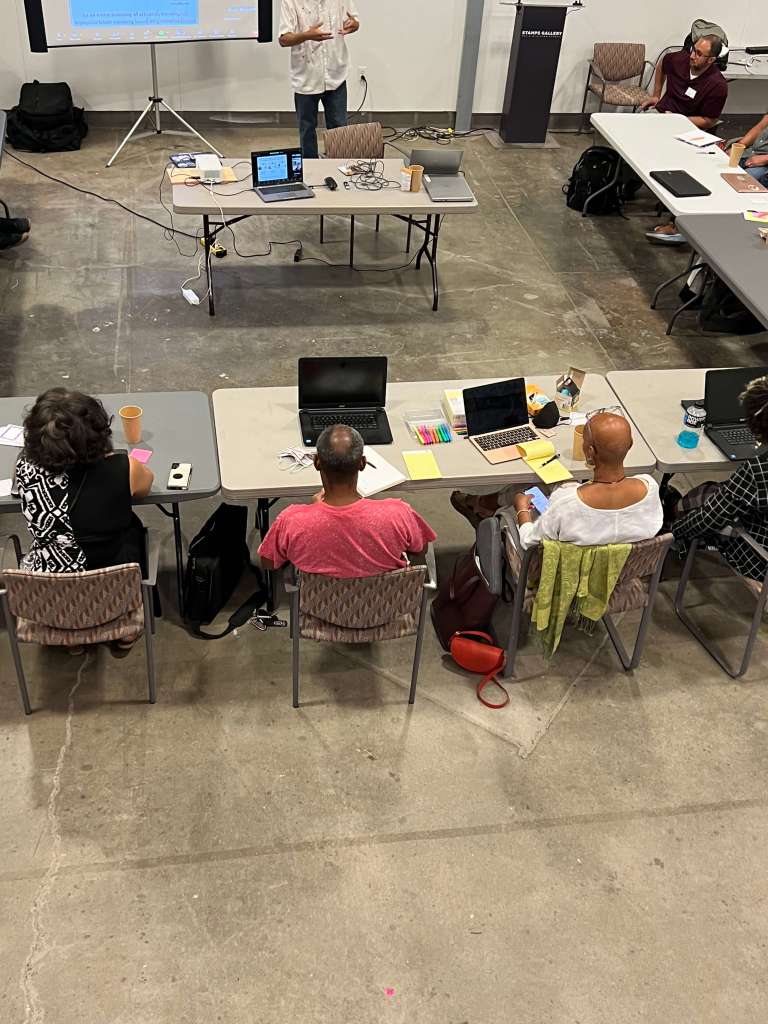
  • Overhead view of a large, open room where a group of people are seated around a U-shaped arrangement of tables, participating in a workshop or training session. A presenter stands at the front near a projection screen, and laptops, notebooks, drinks, and cables are spread across the tables. The industrial-style space features high ceilings, exposed ductwork, and concrete floors.
  • Three people sit at a conference table engaged in discussion, with a laptop and small projector in the foreground displaying a slide. The setting appears to be an open, industrial-style space with metal stairs, a red ladder, and natural light coming through the windows. Notebooks, cups, and tech accessories are scattered across the table.
  • Two women seated at a table in a workshop or maker space, engaged in discussion. The woman on the left is wearing a colorful purple outfit and a face mask, while the woman on the right, holding a microphone, wears a denim jacket over a patterned dress. Laptops, paper cups, and drinks are on the table, with yellow storage cabinets and industrial equipment visible in the background.
  • Overhead view of a group of people seated at tables arranged in a U-shape, participating in a presentation or workshop. Laptops, notebooks, drinks, and colorful sticky notes are on the tables. A presenter stands at the front near a projection screen, while participants listen and take notes in an open room with concrete floors.
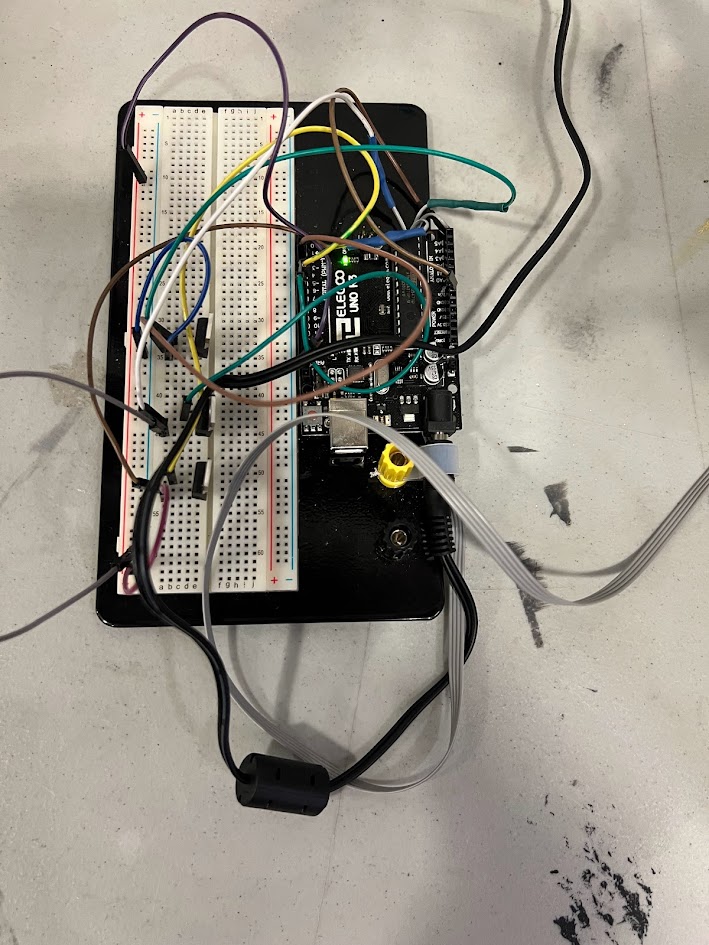
  • A close-up of an electronic breadboard project with multiple colored jumper wires connected to an Arduino microcontroller. The setup is placed on a black platform on a table, with various cables and connectors arranged around it. Some faint smudges are visible on the tabletop surface.
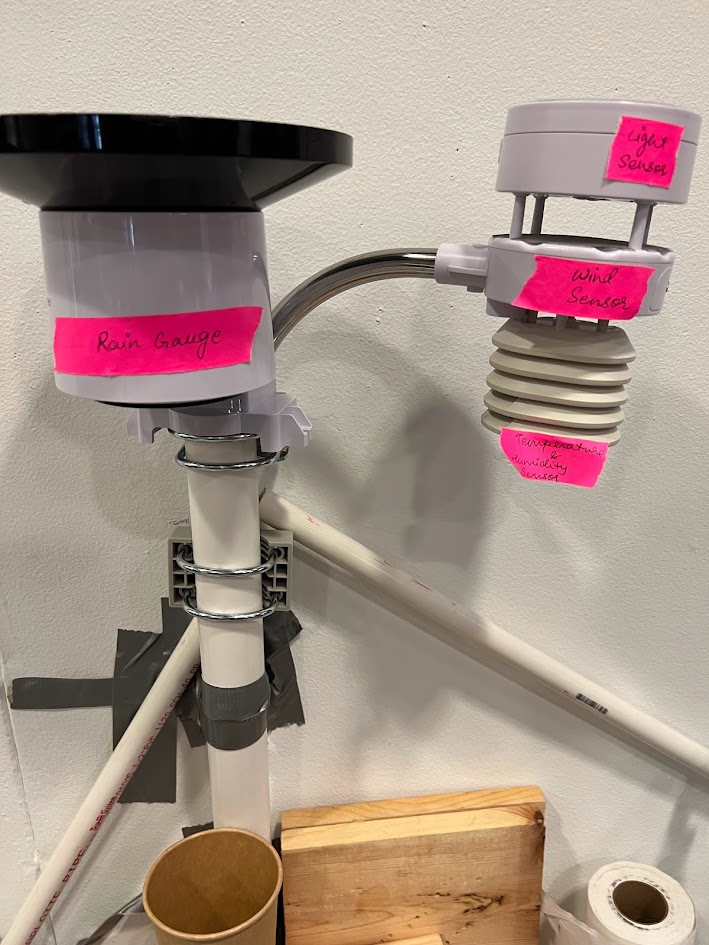
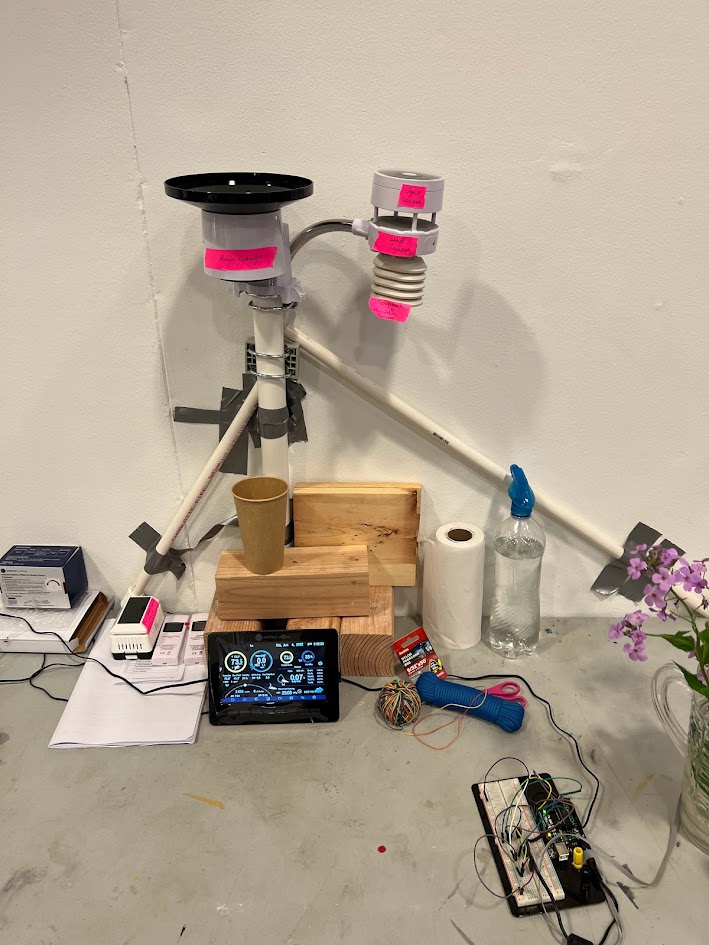
  • A DIY weather sensor setup mounted on a wall, featuring a rain gauge, light sensor, and temperature sensor, each labeled with bright pink tape. The sensors are connected to PVC piping and supported by a wooden base and some duct tape. Additional workshop materials like wood pieces and a roll of tape are visible at the bottom.
  • A DIY weather station setup displayed against a wall, featuring labeled sensors for rain, light, and temperature mounted on PVC pipes. Below the sensors, various components are arranged on the floor and a wooden base, including a tablet displaying sensor data, an electronic breadboard circuit, a multimeter, a spray bottle, and a paper towel roll. A vase with flowers and boxes of electronic components are also part of the scene, suggesting an experimental or educational environment.
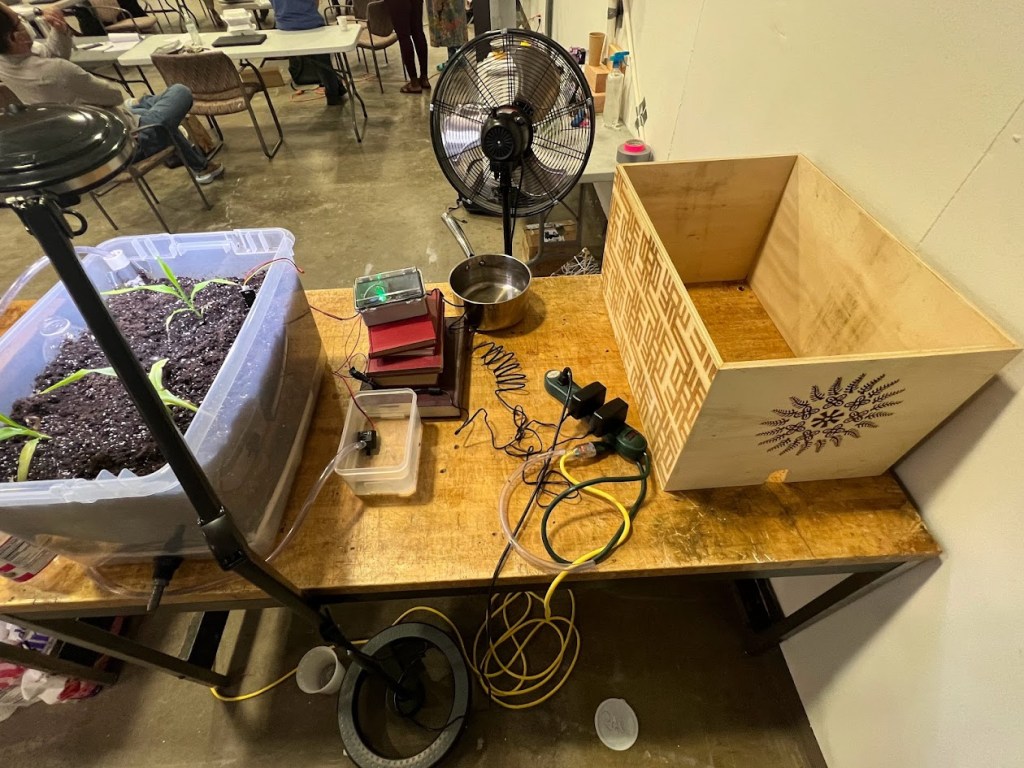
  • A wooden workbench setup featuring a grow light, a plastic bin filled with soil and seedlings, an empty wooden planter box with a floral stencil design, a power strip with cables, a fan, and small electronics. The workspace appears to be part of a larger community or classroom environment, with people and tables visible in the background.
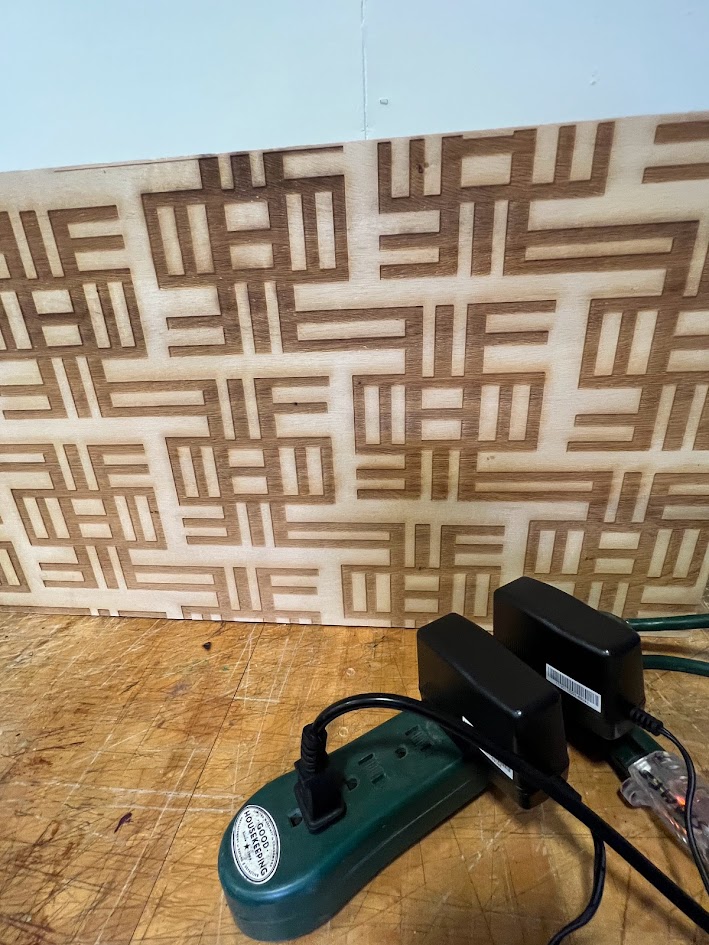
  • A close-up of a wooden surface featuring a laser-etched geometric pattern made up of interlocking rectangular shapes. In front of the panel is a green power strip with electronic plugs and black adapters connected to wires, resting on a scratched wooden table.
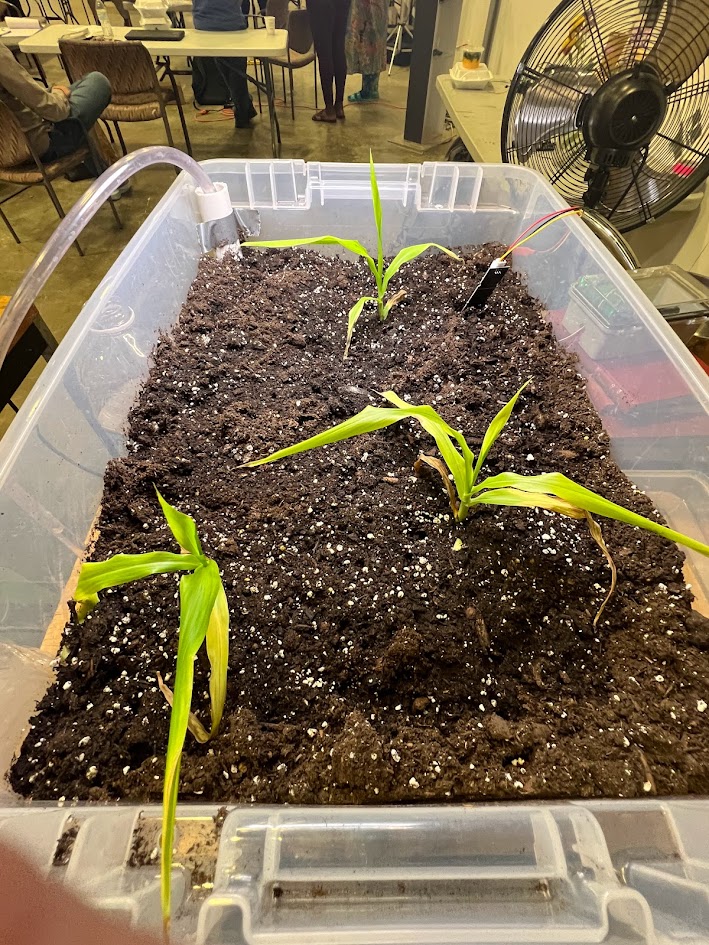
  • A clear plastic container filled with dark soil and several small green corn seedlings sprouting in rows. The setup appears to be part of an indoor gardening or educational project, with a fan in the background and people seated at tables in a shared workspace. A grow light is likely being used just outside the frame.
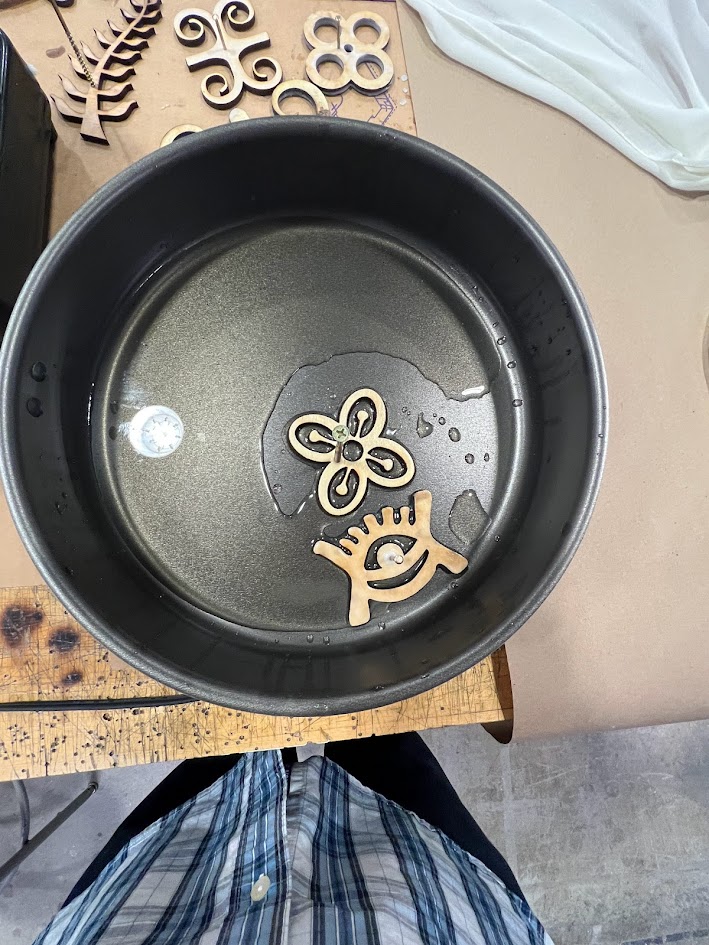
  • A round metal pot with a small amount of water at the bottom contains two decorative wooden pieces—one shaped like a triskelion and the other resembling an eye with lashes. The pot is placed on a wooden surface, and more laser-cut wooden symbols are visible nearby. The lower part of a person wearing a plaid shirt is seen standing in front of the setup.
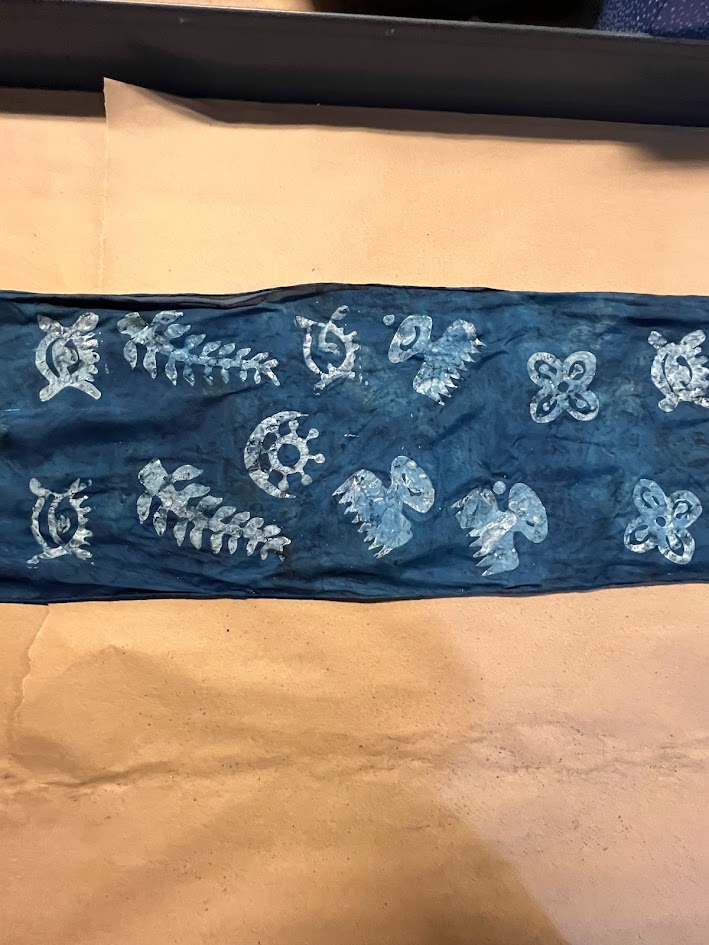
  • A strip of dark blue fabric dyed with white or light blue traditional-style motifs, including ferns, birds, triskelions, and eye-like symbols. The fabric is laid flat on a piece of brown paper, likely as part of a textile art or dyeing workshop. The designs appear to be created using a resist or stencil technique.
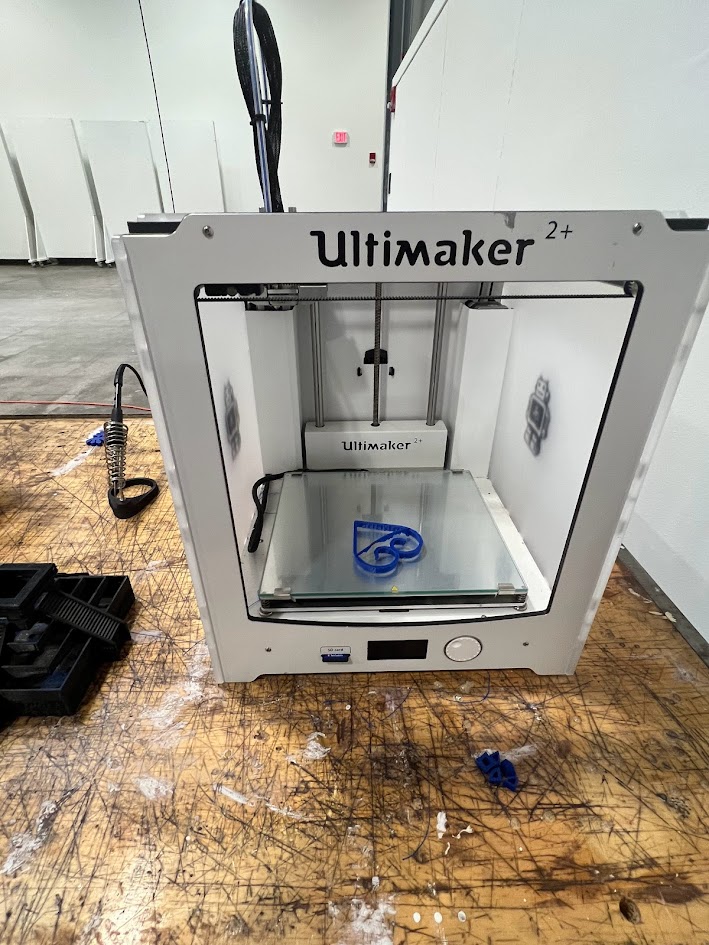
  • Alt text: An Ultimaker 2+ 3D printer sits on a well-used wooden workbench, actively printing a blue object shaped like a stylized symbol or logo. The surrounding area shows signs of creative use, with filament scraps and tool cases nearby. The scene appears to be in a makerspace or workshop environment.
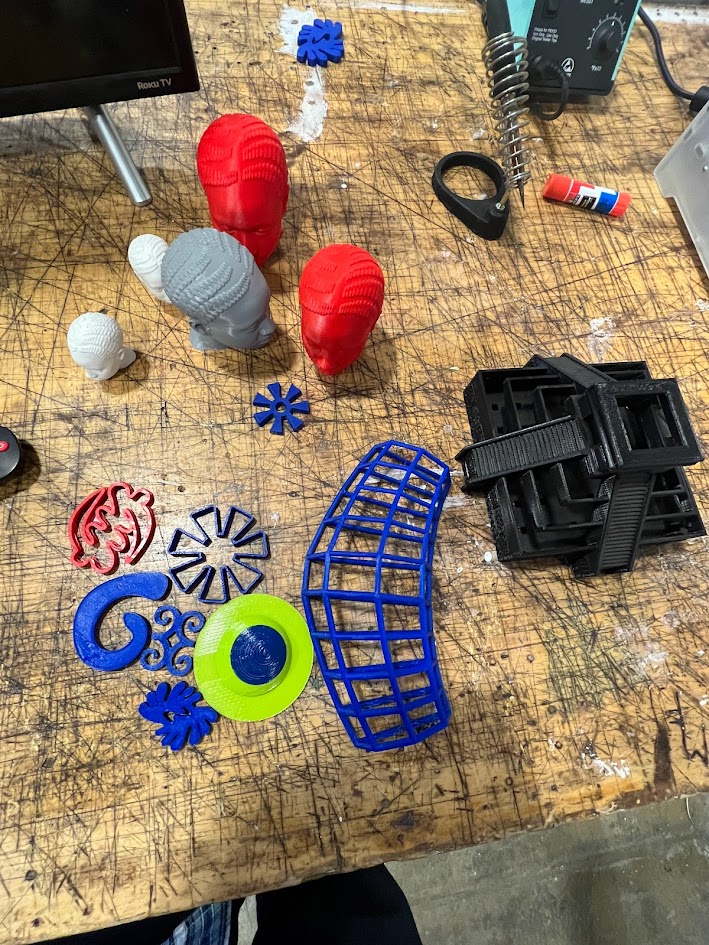
  • A cluttered wooden workbench covered with various colorful 3D printed objects, including stylized heads in red and gray, abstract geometric shapes in blue, green, and red, and black stackable components. A computer monitor, glue stick, and other tools are partially visible, indicating an active maker or fabrication workspace.
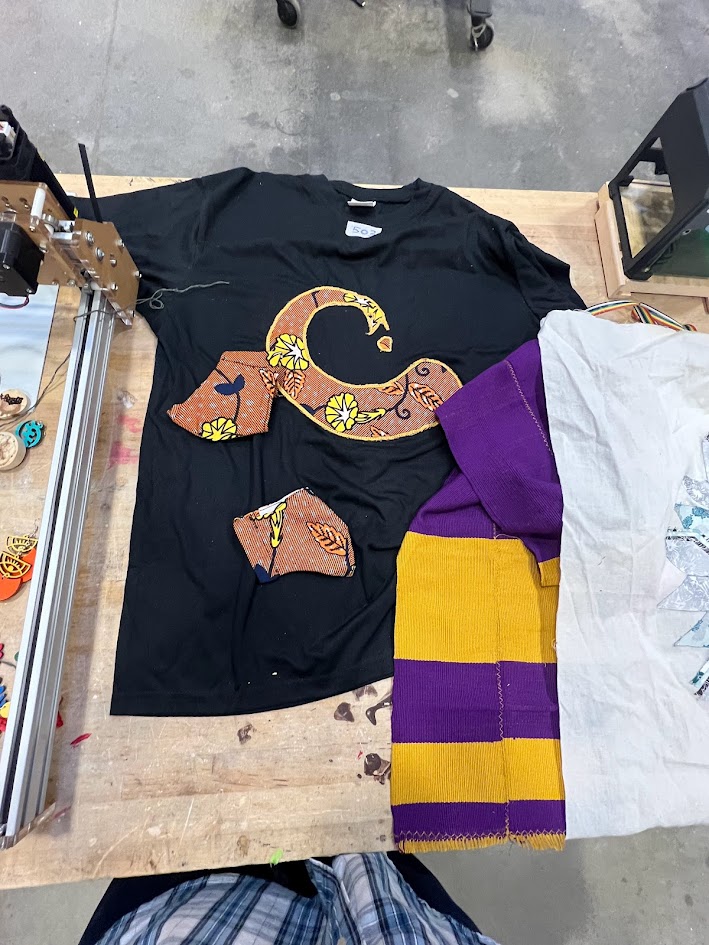
  • A black T-shirt with colorful, patterned applique cutouts arranged on it, laid out on a wooden worktable alongside a purple and yellow knitted garment and part of a white fabric item. The appliques include floral and abstract shapes in shades of orange, yellow, and brown. The setting appears to be a craft or maker space, with tools and equipment visible in the background.
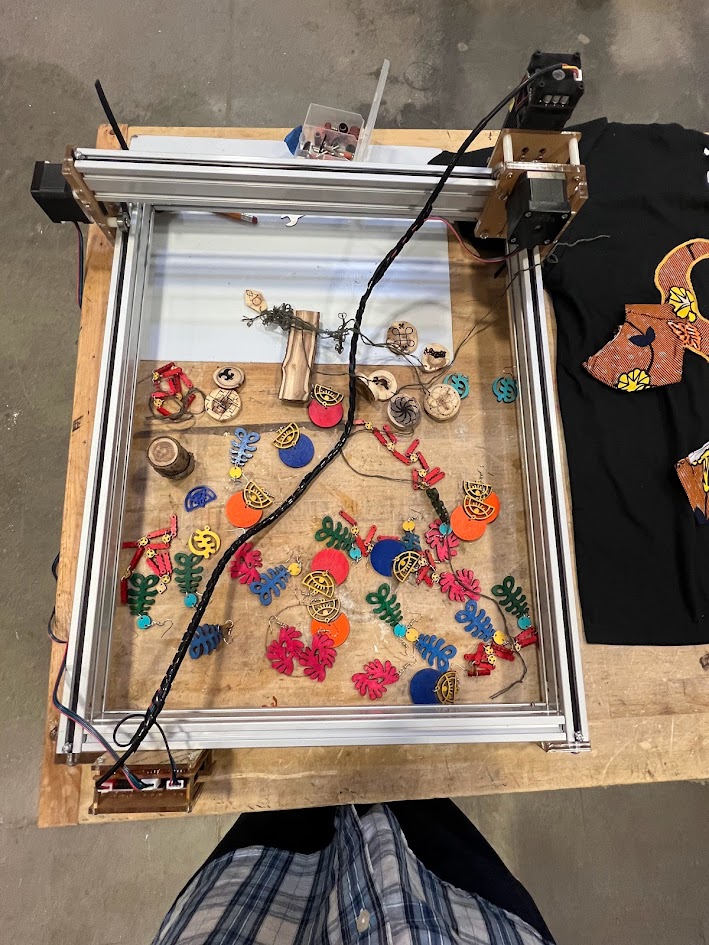
  • Overhead view of a laser cutter or CNC machine on a wooden table, filled with colorful cut-out shapes made from wood or acrylic, including flowers, leaves, and abstract designs. The machine is connected with wires and components, and to the side is a black T-shirt with applique pieces. A person in a plaid shirt is partially visible at the bottom of the image, suggesting an active maker or craft workshop setting.

Publications & Outputs