For a while now, I’ve been mulling over an idea: what if artificial intelligence could develop and transmit its own culture? While AI excels at recognizing patterns and optimizing processes, it’s missing something profoundly human—an algorithm for cultural dynamics. The idea sat on the back burner for years, but after being admitted to UMSI and committing to a UX research track, it feels like the right time to start exploring it in earnest.
The Seed of the Idea
Back in my undergrad days at Wayne State, I didn’t even realize there was an anthropologist on campus, Dr. Robert G. Reynolds, working on what he called cultural algorithms. His lab wasn’t in the anthropology department—it was in computer science, tied to engineering. When I stumbled across his work, I was fascinated. His paper, “Cultural Algorithms: Computational Modeling of How Cultures Learn to Solve Problems”, details how cultural algorithms are used to simulate and understand how cultures adapt to challenges.
It turns out Dr. Reynolds is now a visiting research scientist at the University of Michigan Museum of Anthropological Archaeology. He’s working on developing digital simulations to help the public explore how cultures evolve—a perfect example of blending anthropology, technology, and public engagement.
My idea is more speculative and rooted in science fiction: to create a kind of cultural algorithm that allows AI to not just simulate human cultures but to develop its own. It’s the concept of an AI with a distinct, evolving cultural identity.
A Summer of Learning
When I first came up with this idea, I had no real understanding of the technical challenges it posed. I’ve since started to bridge that gap. Over the summer, I dove into Python basics through Dr. Chuck’s “Python for Everybody” course, a fantastic resource hosted by a UMSI professor. Whether you’re a beginner or someone just curious, I highly recommend it. Even if you copy/paste the code at first, it’s an excellent introduction to programming concepts.
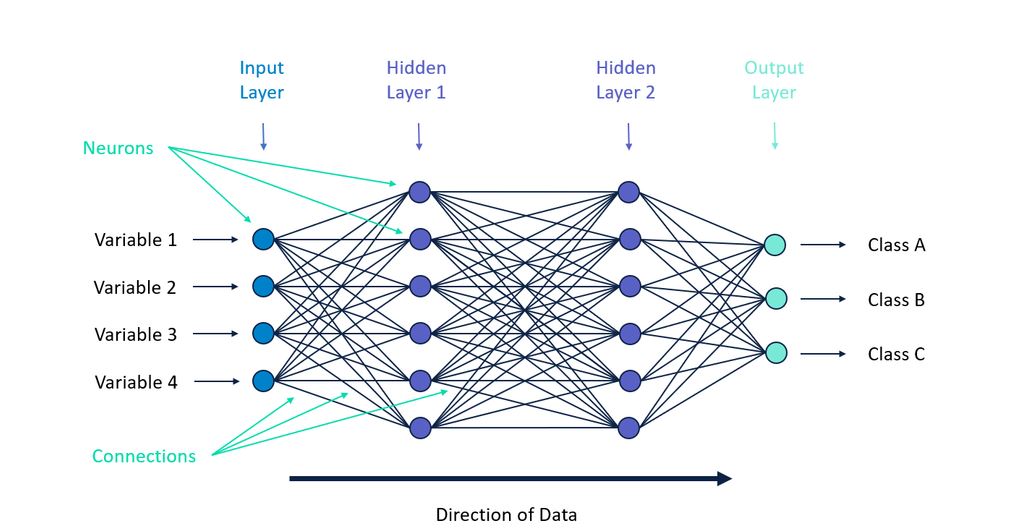
As I’ve gained more technical literacy, I’ve come to realize that “cultural algorithm” might not be the right term for what I’m envisioning. Instead, I’ve started thinking about neural networks for cultural transmission. Neural networks are AI systems that process inputs and generate outputs by passing information through multiple “hidden layers.” Those hidden layers—where the magic happens—feel like a good analogy for the complexities of cultural dynamics.
The Challenge of Cultural Transmission
Cultural transmission is a messy, human process. Teach the same lesson to ten students, and you might end up with ten different interpretations. Learning isn’t just about inputs and outputs; it’s about how individuals filter information through their personal experiences, biases, and social contexts.
This variability is key to what makes culture so rich—and it’s what makes modeling cultural transmission in AI so challenging. If AI could replicate this variability, it might not just mimic culture but participate in it.
Fortunately, the study of cultural transmission already has a foundation in anthropology and related fields. Researchers are exploring topics like the cultural evolution of communication and the mechanisms of intergenerational knowledge transfer. For example, if one of those ten students misunderstands the lesson, they might refine their understanding by learning from a peer who grasped it more accurately. Could AI replicate this peer-to-peer refinement process?
Building the Foundations
To start exploring this, I’m setting up an environment for developing neural networks using Keras with TensorFlow. I’m not an expert, but the internet is an incredible resource. One series I’m starting with is Tech With Tim’s tutorials.
My approach is hands-on and iterative: experiment, fail, and learn from those failures. The hardest part will be designing hidden layers that simulate the nuances of cultural variation and transmission. But with a mix of anthropology, programming, and determination, I believe it’s worth trying.
Why It Matters
Why bother with something as abstract as cultural transmission in AI? Because it’s about more than just AI. It’s about understanding humanity. By teaching AI to “learn” culture, we could gain new insights into how humans create, share, and adapt knowledge. It’s not about replacing human culture but expanding our understanding of it.
And who knows? Maybe one day, we’ll create an AI that isn’t just functional but truly cultural—an AI that learns, grows, and connects like we do.
If you’re intrigued by these intersections of anthropology, AI, and UX, I’d love to hear your thoughts. Let’s explore this frontier together.
 Matt Garvin, MSI
Leave a comment